Antibiotic Resistance: A Global Health Challenge
Explore the mechanisms, causes, and consequences of antibiotic resistance, a critical topic in modern biology and public health.
Includes
Standards
Antibiotic Resistance: A Global Health Challenge
Name:
Date:
Score:
Read each question carefully and answer truthfully based on your knowledge of antibiotic resistance.
1. Which of the following is NOT a common mechanism by which bacteria develop antibiotic resistance?
Efflux pumps actively transport antibiotics out of the cell.
Modification of the antibiotic target site.
Increased production of enzymes that degrade antibiotics.
Decreased cell membrane permeability to antibiotics.
2. Which of the following human activities contributes significantly to the development of antibiotic resistance?
Completing a full course of prescribed antibiotics.
Using antibiotics for viral infections.
Practicing good hygiene to prevent infections.
Vaccinating against bacterial diseases.
3. The transfer of genetic material, including resistance genes, between bacteria is known as .
4. A bacterium that has become resistant to multiple types of antibiotics is often referred to as a .
5. Briefly explain the concept of natural selection as it applies to the development of antibiotic resistance.
6. Describe two strategies that can be implemented at a societal level to combat the rise of antibiotic resistance.
7. Antibiotic resistance means that the human body has become resistant to antibiotics.
True
False
8. Over-prescription of antibiotics in agriculture is a contributing factor to antibiotic resistance.
True
False
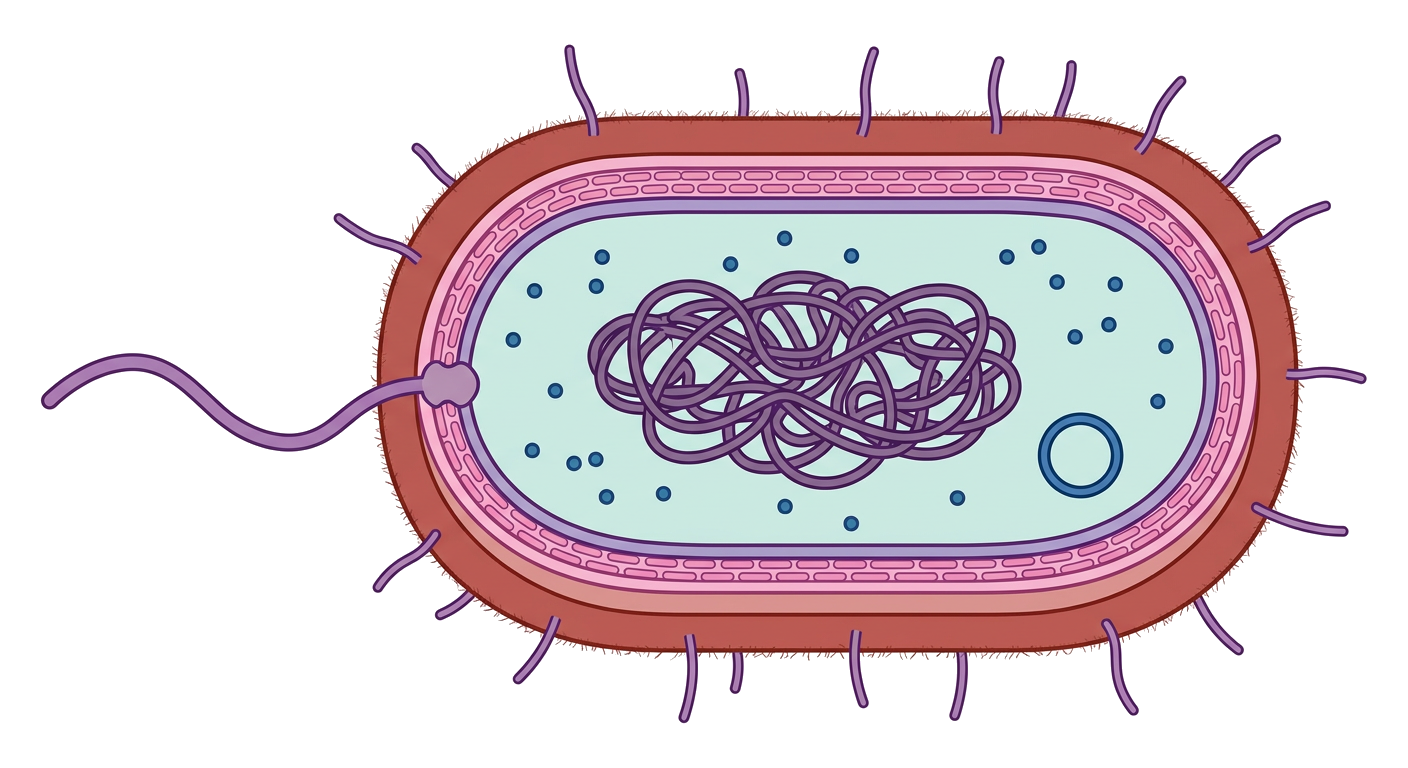
9. Observe the diagram of a bacterial cell below. Identify two potential targets for antibiotics within this cell structure.
Related Worksheets
Grade 12 Biology: Dissection Fundamentals
This worksheet covers essential concepts and practices in biological dissection, including safety, tool identification, and ethical considerations for Grade 12 Biology students.
Grade 12 Biology: The Integumentary System
This worksheet covers the structure, function, and common conditions of the human integumentary system for Grade 12 Biology students.
Grade 12 Biology: Heart Rate
This worksheet explores the physiological mechanisms regulating heart rate, factors influencing it, and methods of measurement for Grade 12 Biology students.
Grade 12 Non-Mendelian Inheritance Worksheet
Explore advanced concepts in genetics beyond simple Mendelian patterns, including incomplete dominance, codominance, multiple alleles, and polygenic inheritance.