Bacteria and Archaea Worksheet
Explore the characteristics, structures, and ecological roles of bacteria and archaea at a Grade 12 level.
Includes
Standards
Topics
Bacteria and Archaea
Name:
Date:
Score:
Read each question carefully and answer to the best of your knowledge. Use complete sentences for short answer questions.
1. Which of the following is a key difference between bacteria and archaea?
Bacteria have a nucleus, while archaea do not.
Archaea have cell walls made of peptidoglycan, while bacteria do not.
The cell membranes of archaea contain unique lipids not found in bacteria.
Archaea are typically larger than bacteria.
2. Which of the following structures is common to both bacteria and archaea?
Mitochondria
Nucleus
Ribosomes
Endoplasmic Reticulum
3. The process by which bacteria exchange genetic material through pili is called .
4. Organisms that thrive in extreme environments, such as high temperatures or salinity, are often classified as .
5. The rigid outer layer that provides structural support and protection to bacterial cells is the .
6. All bacteria are harmful to humans.
True
False
7. Archaea are more closely related to eukaryotes than to bacteria.
True
False
8. Describe the general structure of a typical bacterial cell. You may refer to the diagram below.
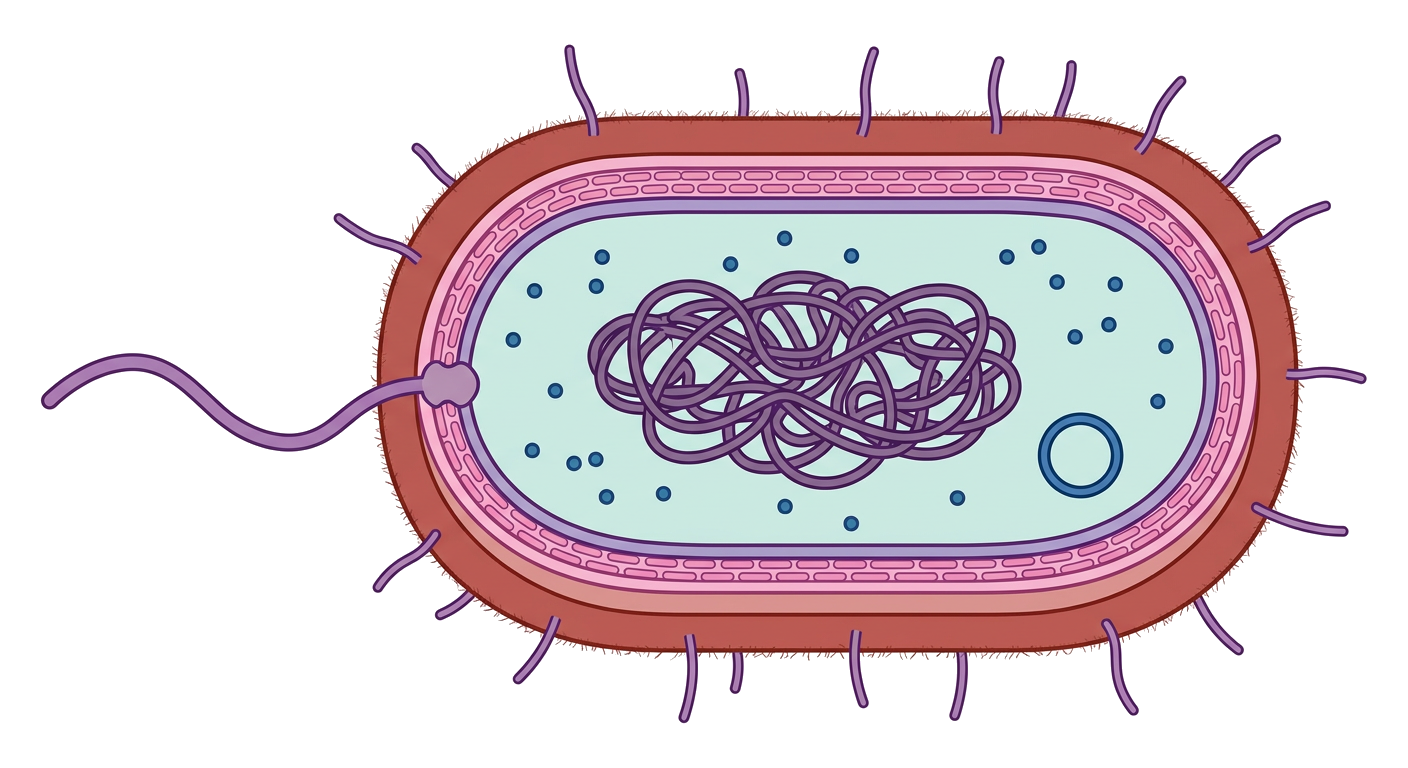
9. Explain the ecological importance of bacteria and archaea in various ecosystems.
Match the term on the left with its definition on the right.
10. Plasmid
a. Organism that produces methane as a byproduct.
11. Halophile
b. Small, circular DNA molecule separate from the main bacterial chromosome.
12. Methanogen
c. Organism that thrives in extremely salty environments.
Related Worksheets
Grade 12 Biology: Dissection Fundamentals
This worksheet covers essential concepts and practices in biological dissection, including safety, tool identification, and ethical considerations for Grade 12 Biology students.
Grade 12 Biology: The Integumentary System
This worksheet covers the structure, function, and common conditions of the human integumentary system for Grade 12 Biology students.
Grade 12 Biology: Heart Rate
This worksheet explores the physiological mechanisms regulating heart rate, factors influencing it, and methods of measurement for Grade 12 Biology students.
Grade 12 Non-Mendelian Inheritance Worksheet
Explore advanced concepts in genetics beyond simple Mendelian patterns, including incomplete dominance, codominance, multiple alleles, and polygenic inheritance.