Biomolecules Worksheet
A Grade 12 science worksheet covering the four major types of biomolecules: carbohydrates, lipids, proteins, and nucleic acids.
Includes
Standards
Topics
Biomolecules: The Molecules of Life
Name:
Date:
Score:
Read each question carefully and provide your best answer. This worksheet assesses your understanding of the four major classes of biomolecules.
1. Which of the following biomolecules is primarily responsible for storing genetic information?
Carbohydrates
Lipids
Proteins
Nucleic acids
2. Which type of bond is responsible for the primary structure of a protein?
Hydrogen bond
Hydrophobic interaction
Peptide bond
Disulfide bond
3. The monomer unit of a protein is an .
4. Starch and cellulose are examples of , which are complex carbohydrates.
5. Describe the main function of lipids in living organisms.
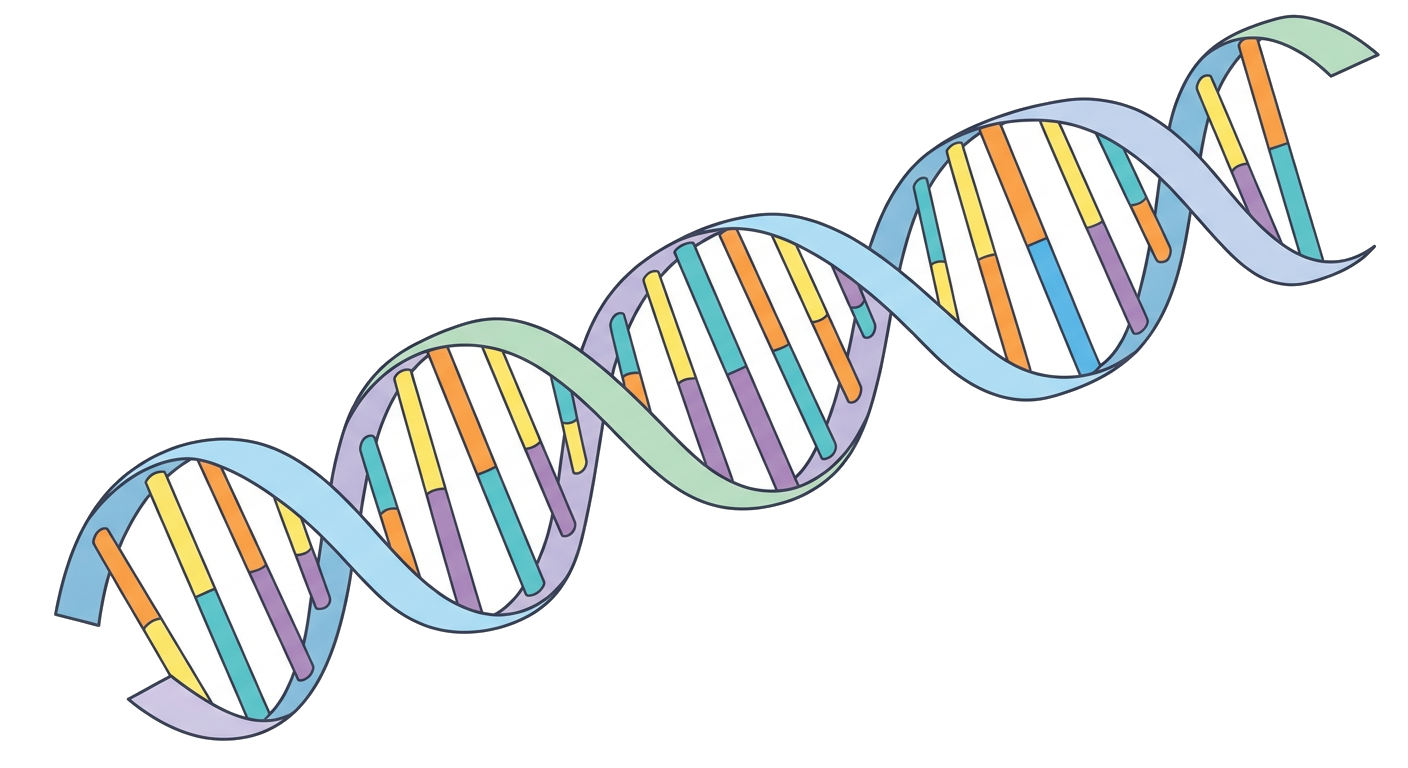
6. Observe the diagram of DNA below. Label the components indicated by the arrows (phosphate, deoxyribose sugar, nitrogenous base).
7. Enzymes are a type of lipid that catalyze biochemical reactions.
True
False
8. Saturated fatty acids contain one or more double bonds between carbon atoms.
True
False
Use the words below to complete the sentences.
9. DNA and RNA are polymers made up of repeating units called .
10. Glucose is a simple sugar, classified as a .
Related Worksheets
Grade 12 Biology: Dissection Fundamentals
This worksheet covers essential concepts and practices in biological dissection, including safety, tool identification, and ethical considerations for Grade 12 Biology students.
Grade 12 Biology: The Integumentary System
This worksheet covers the structure, function, and common conditions of the human integumentary system for Grade 12 Biology students.
Grade 12 Biology: Heart Rate
This worksheet explores the physiological mechanisms regulating heart rate, factors influencing it, and methods of measurement for Grade 12 Biology students.
Grade 12 Non-Mendelian Inheritance Worksheet
Explore advanced concepts in genetics beyond simple Mendelian patterns, including incomplete dominance, codominance, multiple alleles, and polygenic inheritance.