Grade 12 Brain Development Worksheet
Explore the intricate processes of human brain development from prenatal stages to adolescence, covering key structures, cellular events, and influential factors.
Includes
Standards
Topics
Brain Development: From Zygote to Adult
Name:
Date:
Score:
Read each question carefully and provide thoughtful, detailed answers. For multiple-choice questions, select the best option. For short-answer questions, use the provided lines.
1. Which of the following processes is primarily responsible for the increase in brain size during early development?
Apoptosis
Neurogenesis
Synaptogenesis
Myelination
2. The critical period for language acquisition highlights the importance of which developmental process?
Neuronal migration
Synaptic pruning
Gliogenesis
Neurotrophic factor release
1. The formation of new neurons from neural stem cells is called .
2. The process by which glial cells wrap around axons to form an insulating layer is known as .
3. The is a protective barrier that regulates the passage of substances from the bloodstream into the brain.
4. The rapid increase in synaptic connections during infancy is referred to as .
1. Describe the role of both genetic and environmental factors in shaping brain development.
2. Explain the concept of 'plasticity' in the context of brain development and provide an example.
1. The human brain continues to develop and undergo significant changes well into early adulthood.
True
False
2. Exposure to toxins during prenatal development can have long-lasting negative impacts on brain structure and function.
True
False
Observe the diagram of the human brain. Identify and label the indicated parts involved in development and function.
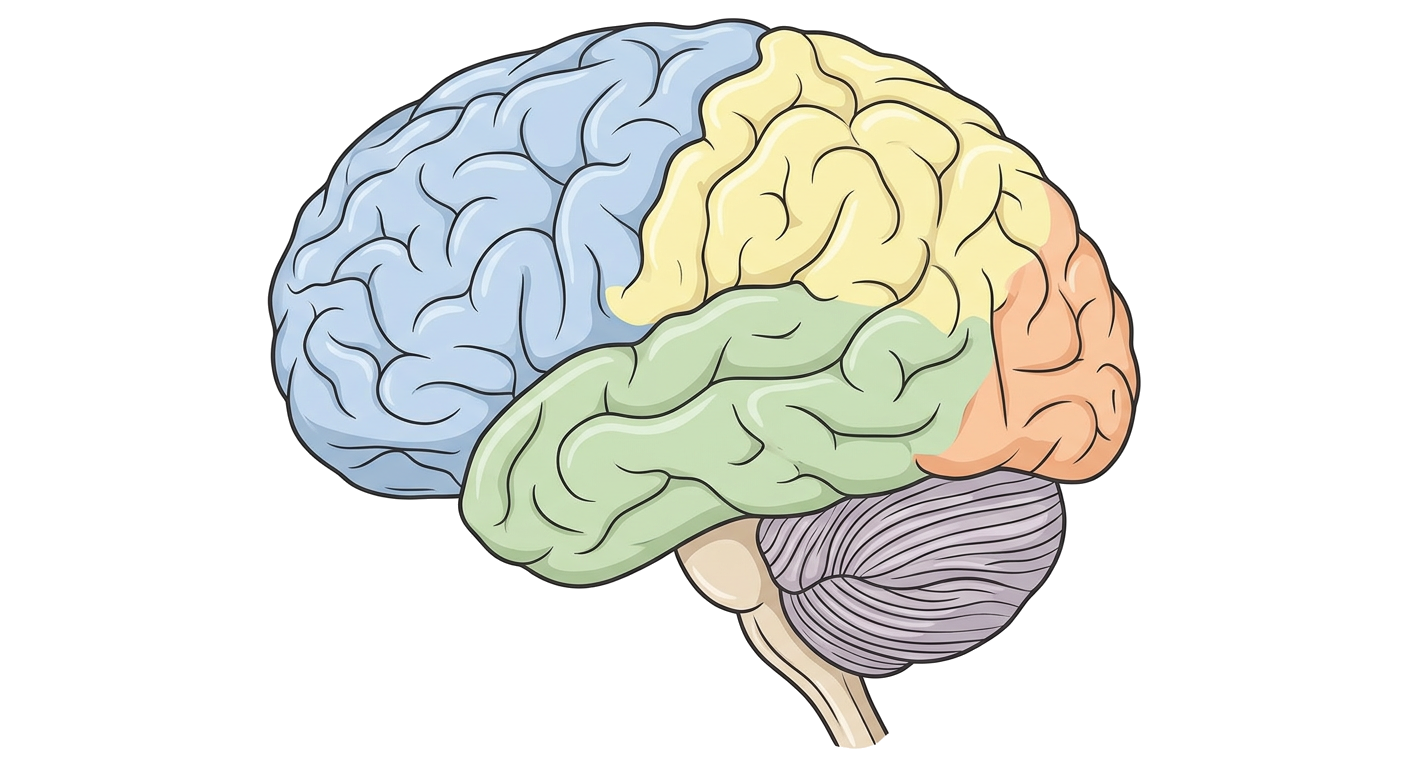
A:
B:
C:
Related Worksheets
Grade 12 Biology: Dissection Fundamentals
This worksheet covers essential concepts and practices in biological dissection, including safety, tool identification, and ethical considerations for Grade 12 Biology students.
Grade 12 Biology: The Integumentary System
This worksheet covers the structure, function, and common conditions of the human integumentary system for Grade 12 Biology students.
Grade 12 Biology: Heart Rate
This worksheet explores the physiological mechanisms regulating heart rate, factors influencing it, and methods of measurement for Grade 12 Biology students.
Grade 12 Non-Mendelian Inheritance Worksheet
Explore advanced concepts in genetics beyond simple Mendelian patterns, including incomplete dominance, codominance, multiple alleles, and polygenic inheritance.