Cardiovascular System Review
A Grade 12 science worksheet reviewing the structure and function of the human cardiovascular system.
Includes
Standards
Topics
Cardiovascular System Review
Name:
Date:
Score:
Read each question carefully and provide your best answer. Refer to the provided diagram where necessary.
1. Which chamber of the heart receives oxygenated blood from the lungs?
Right atrium
Right ventricle
Left atrium
Left ventricle
2. Which blood vessel carries deoxygenated blood from the heart to the lungs?
Aorta
Pulmonary artery
Pulmonary vein
Vena cava
Refer to the diagram of the human heart below for the following questions.
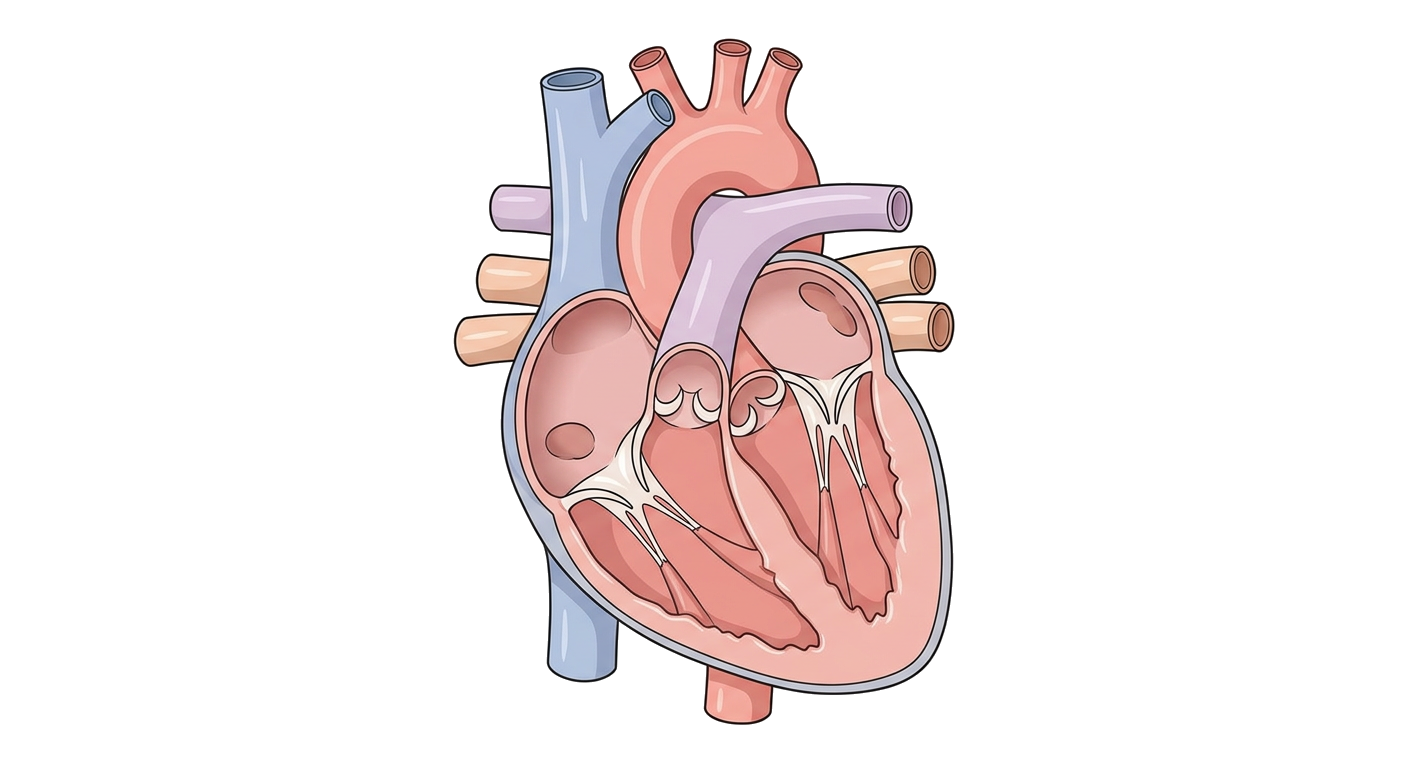
3. The is the largest artery in the body, carrying oxygenated blood from the left ventricle to the rest of the body.
4. The prevent the backflow of blood within the heart.
5. Briefly explain the difference between systemic circulation and pulmonary circulation.
6. Describe the role of capillaries in the cardiovascular system.
7. Arteries always carry oxygenated blood away from the heart.
True
False
8. The heart is primarily composed of smooth muscle tissue.
True
False
Match the term on the left with its correct definition on the right.
9. Pericardium
a. Muscular wall separating the ventricles
10. Septum
b. Sac enclosing the heart
11. Myocardium
c. Heart's muscular tissue
Related Worksheets
Grade 12 Biology: Dissection Fundamentals
This worksheet covers essential concepts and practices in biological dissection, including safety, tool identification, and ethical considerations for Grade 12 Biology students.
Grade 12 Biology: The Integumentary System
This worksheet covers the structure, function, and common conditions of the human integumentary system for Grade 12 Biology students.
Grade 12 Biology: Heart Rate
This worksheet explores the physiological mechanisms regulating heart rate, factors influencing it, and methods of measurement for Grade 12 Biology students.
Grade 12 Non-Mendelian Inheritance Worksheet
Explore advanced concepts in genetics beyond simple Mendelian patterns, including incomplete dominance, codominance, multiple alleles, and polygenic inheritance.