Cell Differentiation Worksheet
Explore the process of cell differentiation, its mechanisms, and its importance in multicellular organisms at a Grade 12 level.
Includes
Standards
Topics
Cell Differentiation: Exploring Specialization
Name:
Date:
Score:
Read each question carefully and answer to the best of your ability. This worksheet covers key concepts related to cell differentiation.
1. Which of the following best defines cell differentiation?
The process by which cells divide to produce more cells.
The process by which cells become specialized in structure and function.
The process of programmed cell death.
The process of cells absorbing nutrients from their environment.
2. What is the primary factor that determines how a cell differentiates?
The size of the cell.
Its location and the chemical signals it receives.
The age of the organism.
The number of chromosomes it contains.
3. cells are undifferentiated cells that have the potential to become various cell types.
4. The process of cell differentiation is largely controlled by the selective of genes.
5. All cells in a multicellular organism have the same genes, but only a subset of these genes are expressed in any given cell type.
True
False
6. Once a cell has differentiated into a specific cell type, it can easily revert back to a pluripotent state.
True
False
7. Explain the difference between totipotency, pluripotency, and multipotency.
8. Describe how environmental factors can influence cell differentiation.
Match the term with its correct description.
9. Stem cell niche
a. A fully differentiated cell that has been reprogrammed to an embryonic-like pluripotent state.
10. Epigenetics
b. The specific microenvironment where stem cells reside and maintain their undifferentiated state.
11. Induced pluripotent stem cells (iPSCs)
c. The study of heritable phenotype changes that do not involve alterations in the DNA sequence.
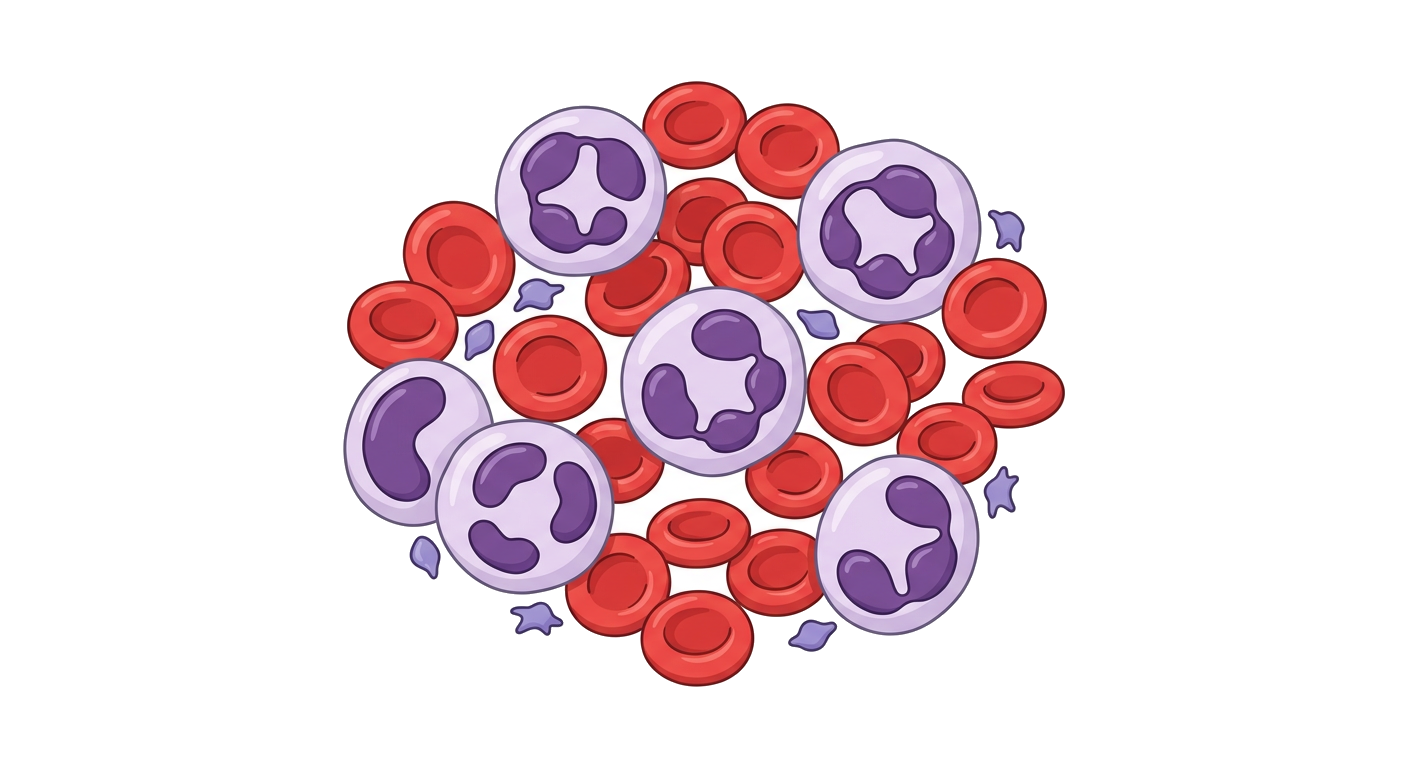
12. Observe the image below showing different types of blood cells. Explain how these diverse cells, all originating from hematopoietic stem cells, achieve their specialized structures and functions. Discuss the role of differentiation in this process.
Related Worksheets
Grade 12 Biology: Dissection Fundamentals
This worksheet covers essential concepts and practices in biological dissection, including safety, tool identification, and ethical considerations for Grade 12 Biology students.
Grade 12 Biology: The Integumentary System
This worksheet covers the structure, function, and common conditions of the human integumentary system for Grade 12 Biology students.
Grade 12 Biology: Heart Rate
This worksheet explores the physiological mechanisms regulating heart rate, factors influencing it, and methods of measurement for Grade 12 Biology students.
Grade 12 Non-Mendelian Inheritance Worksheet
Explore advanced concepts in genetics beyond simple Mendelian patterns, including incomplete dominance, codominance, multiple alleles, and polygenic inheritance.