DNA Structure and Replication Worksheet
Grade 12 biology worksheet covering the structure of DNA and the process of DNA replication.
Includes
Standards
Topics
DNA Structure and Replication
Name:
Date:
Score:
Read each question carefully and provide clear, concise answers. For multiple-choice questions, circle the best option. For diagrams, label all indicated parts.
1. Which of the following is NOT a component of a DNA nucleotide?
Deoxyribose sugar
Phosphate group
Ribose sugar
Nitrogenous base
2. Which enzyme is responsible for unwinding the DNA double helix during replication?
DNA Polymerase
Ligase
Helicase
Primase
3. The two strands of DNA are held together by bonds between the nitrogenous bases.
4. DNA replication is considered because each new DNA molecule consists of one original strand and one newly synthesized strand.
5. The enzyme adds complementary nucleotides to the growing DNA strand during replication.
6. Describe the antiparallel nature of the DNA double helix.
7. Label the following diagram of DNA structure:
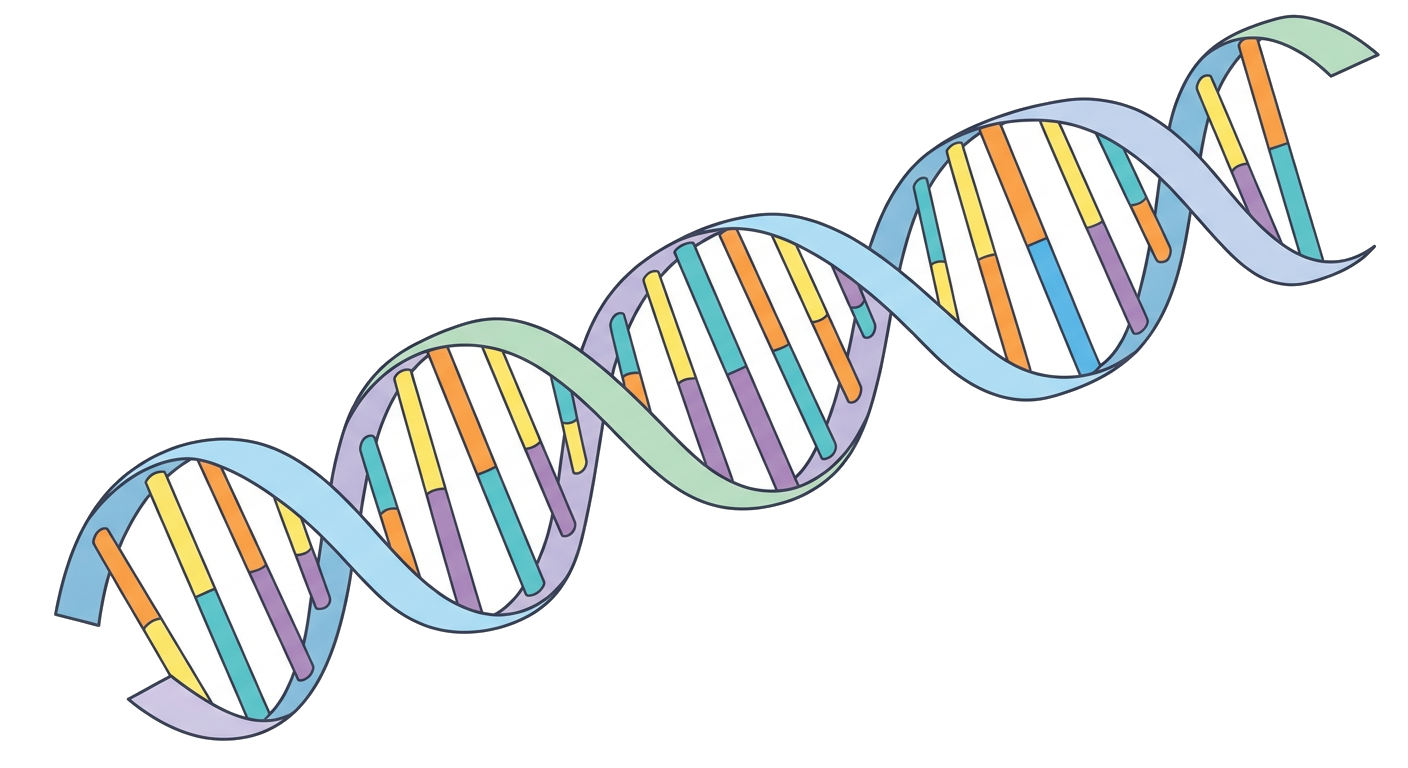
A:
B:
C:
D:
8. The leading strand is synthesized continuously, while the lagging strand is synthesized in fragments.
True
False
9. Okazaki fragments are found on the leading strand during DNA replication.
True
False
10. Briefly explain the role of DNA ligase in DNA replication.
Related Worksheets
Grade 12 Biology: Dissection Fundamentals
This worksheet covers essential concepts and practices in biological dissection, including safety, tool identification, and ethical considerations for Grade 12 Biology students.
Grade 12 Biology: The Integumentary System
This worksheet covers the structure, function, and common conditions of the human integumentary system for Grade 12 Biology students.
Grade 12 Biology: Heart Rate
This worksheet explores the physiological mechanisms regulating heart rate, factors influencing it, and methods of measurement for Grade 12 Biology students.
Grade 12 Non-Mendelian Inheritance Worksheet
Explore advanced concepts in genetics beyond simple Mendelian patterns, including incomplete dominance, codominance, multiple alleles, and polygenic inheritance.