DNA Transcription and Translation Worksheet
Grade 12 Biology worksheet covering the processes of DNA transcription and translation, including key components and steps.
Includes
Standards
Topics
DNA Transcription and Translation
Name:
Date:
Score:
Read each question carefully and answer to the best of your ability. Show all your work where applicable.
1. Which enzyme is responsible for synthesizing mRNA during transcription?
DNA Polymerase
RNA Polymerase
Helicase
Ligase
1. The process of converting genetic information from DNA into mRNA is called .
2. During translation, the reads the mRNA sequence and synthesizes a protein.
3. A sequence of three nucleotides on mRNA that codes for a specific amino acid is known as a .
1. Briefly explain the main difference between transcription and translation.
1. In eukaryotes, transcription occurs in the cytoplasm.
True
False
Match the term on the left with its description on the right.
1. Codon
a. Carries amino acids to the ribosome
2. Anticodon
b. Three-nucleotide sequence on tRNA
3. tRNA
c. Three-nucleotide sequence on mRNA
Observe the diagram below showing a segment of DNA. If the top strand is the template strand, write the complementary mRNA sequence.
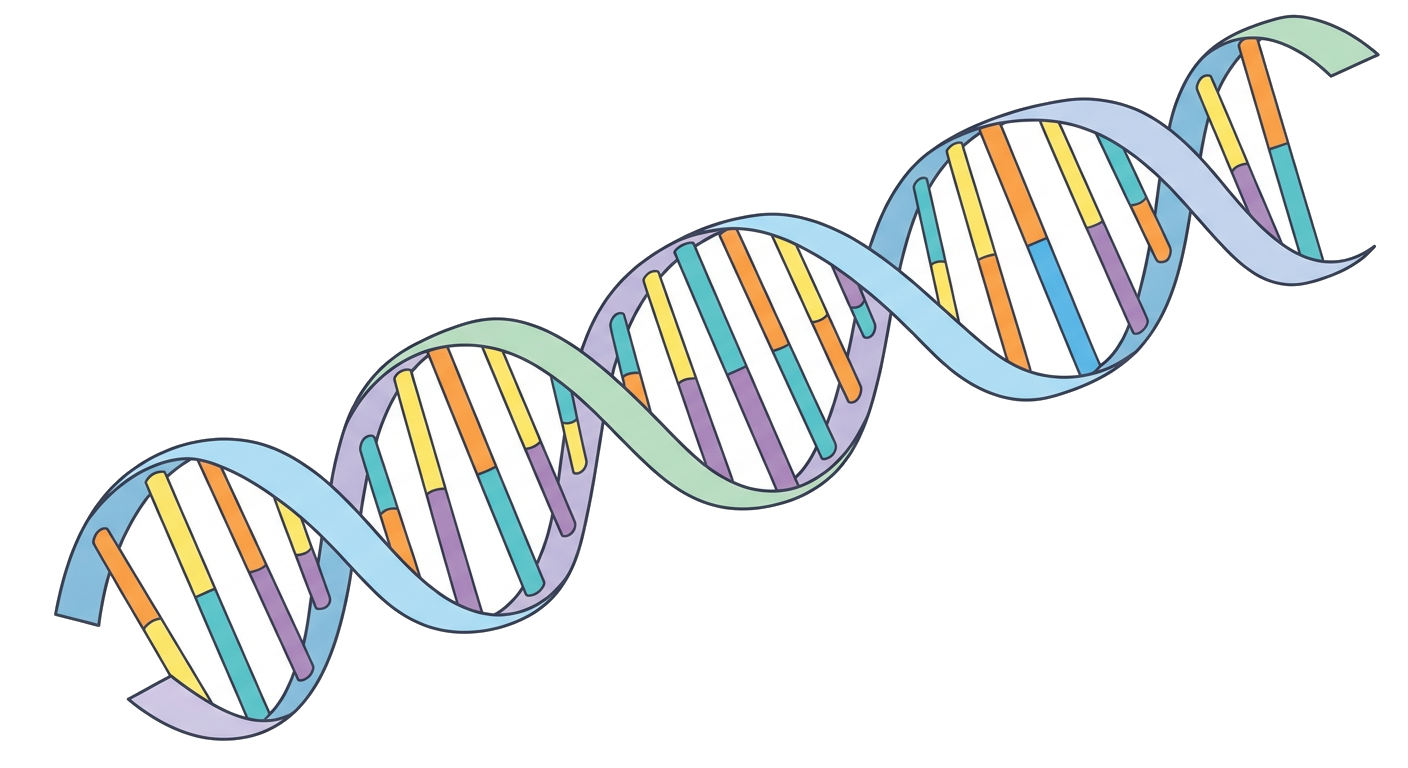
DNA Template Strand: 3'-TAC GCA TGG TAA-5'
mRNA Sequence:
Related Worksheets
Grade 12 Biology: Dissection Fundamentals
This worksheet covers essential concepts and practices in biological dissection, including safety, tool identification, and ethical considerations for Grade 12 Biology students.
Grade 12 Biology: The Integumentary System
This worksheet covers the structure, function, and common conditions of the human integumentary system for Grade 12 Biology students.
Grade 12 Biology: Heart Rate
This worksheet explores the physiological mechanisms regulating heart rate, factors influencing it, and methods of measurement for Grade 12 Biology students.
Grade 12 Non-Mendelian Inheritance Worksheet
Explore advanced concepts in genetics beyond simple Mendelian patterns, including incomplete dominance, codominance, multiple alleles, and polygenic inheritance.