The Human Ear: Structure and Function
This worksheet explores the intricate structure and function of the human ear, focusing on the mechanisms of hearing and balance.
Includes
Standards
Topics
The Human Ear: Structure and Function
Name:
Date:
Score:
Read each question carefully and provide detailed answers based on your knowledge of the human ear.
Refer to the diagram below to answer the following questions.
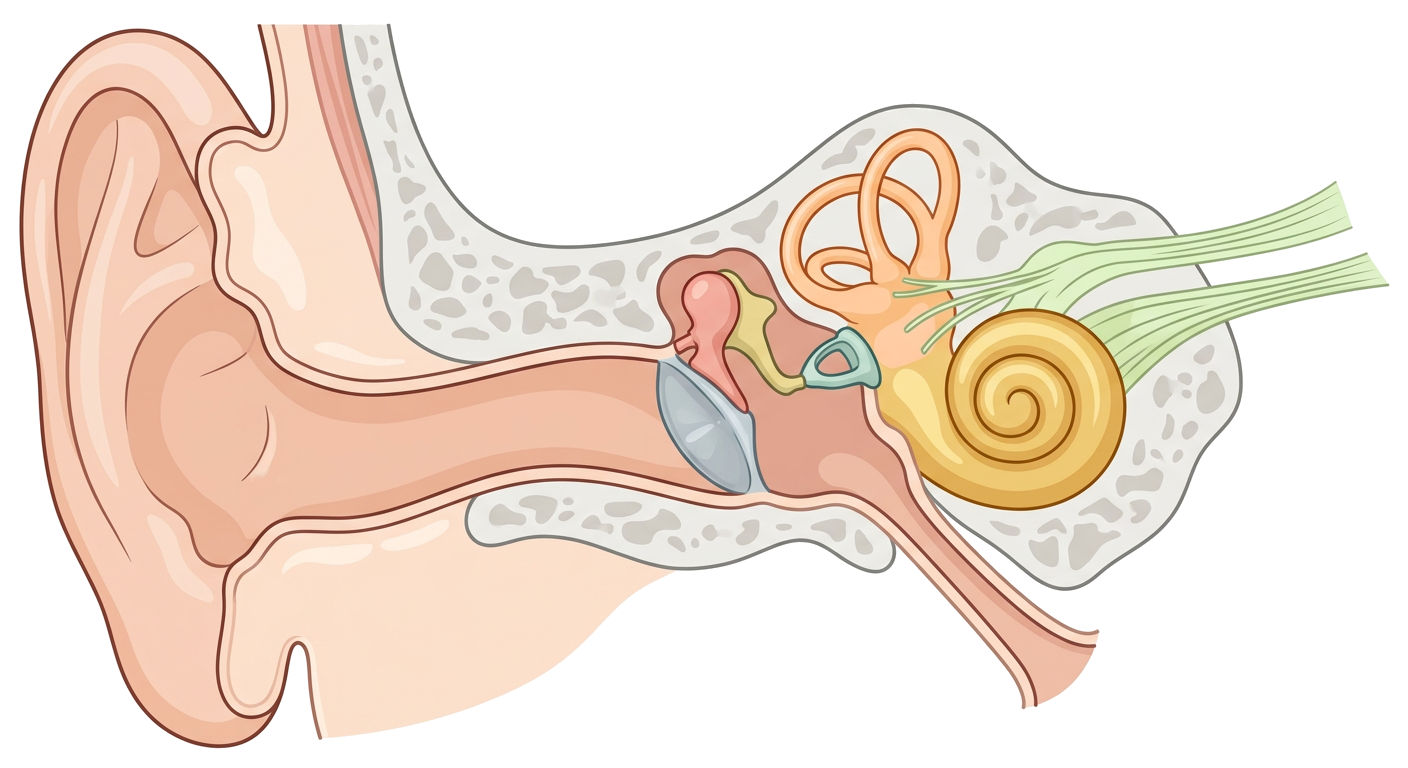
1. Label the major parts of the outer, middle, and inner ear on the diagram provided above.
2. Which of the following structures is responsible for converting sound vibrations into electrical signals?
Tympanic membrane
Ossicles
Cochlea
Semicircular canals
3. The primary function of the Eustachian tube is to:
Transmit sound to the inner ear
Maintain balance
Equalize pressure in the middle ear
Produce earwax
4. The three small bones in the middle ear are collectively known as the .
5. The nerve transmits auditory information from the cochlea to the brain.
6. Describe the process by which sound waves are transmitted from the outer ear to the inner ear.
7. Explain the role of the semicircular canals in maintaining balance.
Match each part of the ear with its primary function.
8. Pinna
a. Amplifies sound vibrations
9. Ossicles
b. Collects sound waves
10. Cochlea
c. Converts vibrations to electrical signals
Related Worksheets
Grade 12 Biology: Dissection Fundamentals
This worksheet covers essential concepts and practices in biological dissection, including safety, tool identification, and ethical considerations for Grade 12 Biology students.
Grade 12 Biology: The Integumentary System
This worksheet covers the structure, function, and common conditions of the human integumentary system for Grade 12 Biology students.
Grade 12 Biology: Heart Rate
This worksheet explores the physiological mechanisms regulating heart rate, factors influencing it, and methods of measurement for Grade 12 Biology students.
Grade 12 Non-Mendelian Inheritance Worksheet
Explore advanced concepts in genetics beyond simple Mendelian patterns, including incomplete dominance, codominance, multiple alleles, and polygenic inheritance.