Forensic Anthropology Worksheet
This worksheet explores key concepts in forensic anthropology, including skeletal identification, trauma analysis, and taphonomy.
Includes
Standards
Topics
Forensic Anthropology: Skeletal Secrets
Name:
Date:
Score:
Read each question carefully and provide your best answer. Use complete sentences for short answer questions.
1. Which of the following is NOT a primary goal of a forensic anthropologist?
Estimating time since death
Determining cause of death
Identifying skeletal remains
Analyzing trauma to bones
2. Which bone is most commonly used to determine the biological sex of an individual from skeletal remains?
Femur
Skull
Pelvis
Humerus
3. The study of how organisms decay and how they become fossilized is known as .
4. The fusion of epiphyses to diaphyses is a key indicator used by forensic anthropologists to estimate the of an individual.
5. Briefly explain the difference between antemortem, perimortem, and postmortem trauma in forensic anthropology.
6. DNA analysis can be performed on skeletal remains even if the soft tissues are completely decomposed.
True
False
7. The supraorbital ridge is generally more pronounced in female skulls than in male skulls.
True
False
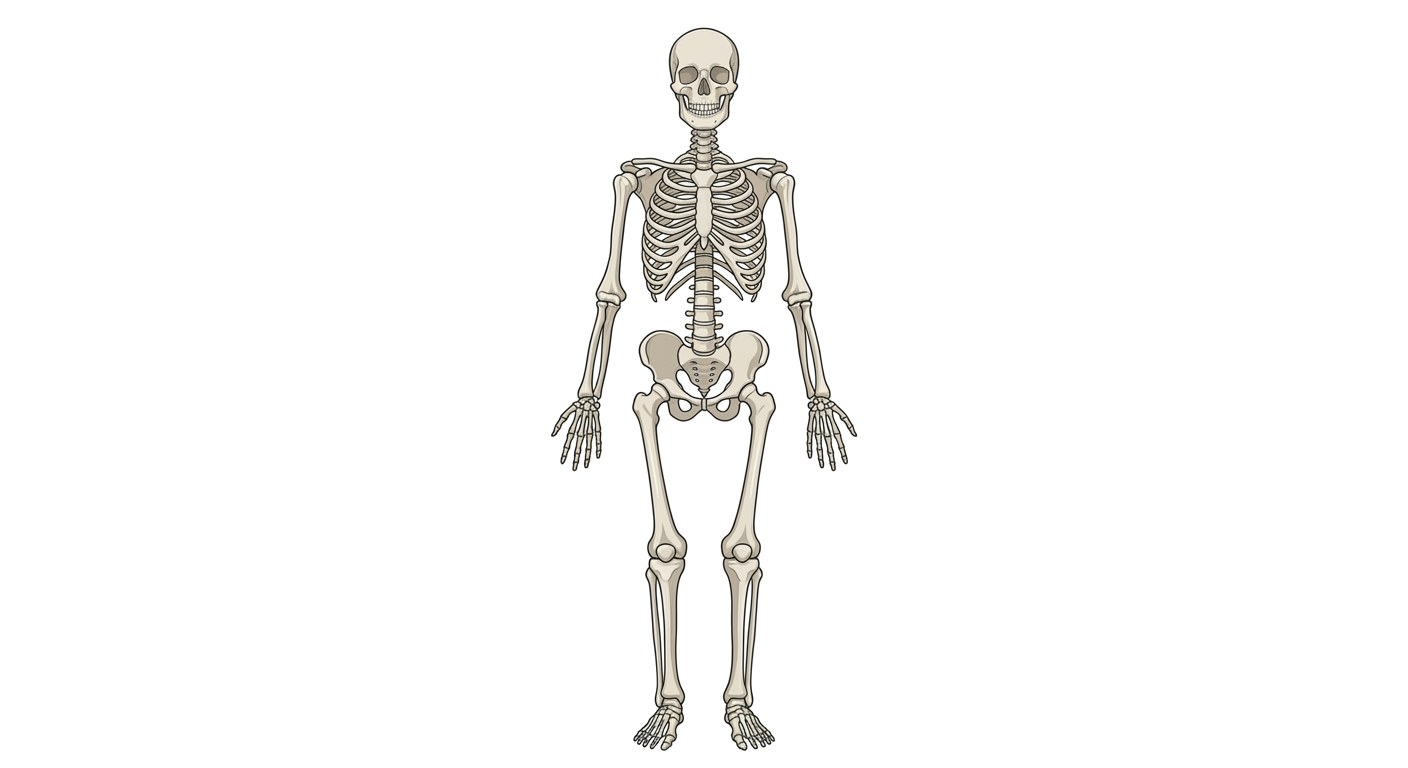
8. Observe the human skeleton diagram below. Identify three distinct features that a forensic anthropologist might use to determine the ancestry of an individual.
Match the term on the left with its definition on the right.
9. Osteology
a. The study of human skeletal remains in a legal context.
10. Forensic taphonomy
b. The study of bones.
11. Bioarchaeology
c. The study of decomposition and postmortem processes.
12. Anthropology
d. The study of human biological and cultural evolution through skeletal remains from archaeological contexts.
Related Worksheets
Grade 12 Biology: Dissection Fundamentals
This worksheet covers essential concepts and practices in biological dissection, including safety, tool identification, and ethical considerations for Grade 12 Biology students.
Grade 12 Biology: The Integumentary System
This worksheet covers the structure, function, and common conditions of the human integumentary system for Grade 12 Biology students.
Grade 12 Biology: Heart Rate
This worksheet explores the physiological mechanisms regulating heart rate, factors influencing it, and methods of measurement for Grade 12 Biology students.
Grade 12 Non-Mendelian Inheritance Worksheet
Explore advanced concepts in genetics beyond simple Mendelian patterns, including incomplete dominance, codominance, multiple alleles, and polygenic inheritance.