Genetic Engineering Worksheet
Explore the principles and applications of genetic engineering, including DNA manipulation, ethical considerations, and real-world impacts, for Grade 12 Biology students.
Includes
Standards
Topics
Genetic Engineering: Concepts and Applications
Name:
Date:
Score:
Read each question carefully and provide your best answer. For multiple-choice questions, circle the correct option. For fill-in-the-blanks, write your answer in the space provided. For short-answer questions, use complete sentences.
1. Which enzyme is commonly used to cut DNA at specific recognition sequences?
DNA ligase
RNA polymerase
Restriction endonuclease
Helicase
2. What is the primary purpose of CRISPR-Cas9 technology in genetic engineering?
Protein synthesis
Gene sequencing
Precise gene editing
DNA replication
3. The process of inserting foreign DNA into an organism's genome is called .
4. A plasmid is a small, circular DNA molecule found in bacteria that is often used as a in genetic engineering.
5. Briefly explain the concept of recombinant DNA technology.
6. Describe one ethical concern associated with the use of genetic engineering in humans.
7. Genetically modified organisms (GMOs) are always harmful to human health.
True
False
8. Gene therapy is a form of genetic engineering used to treat genetic diseases.
True
False
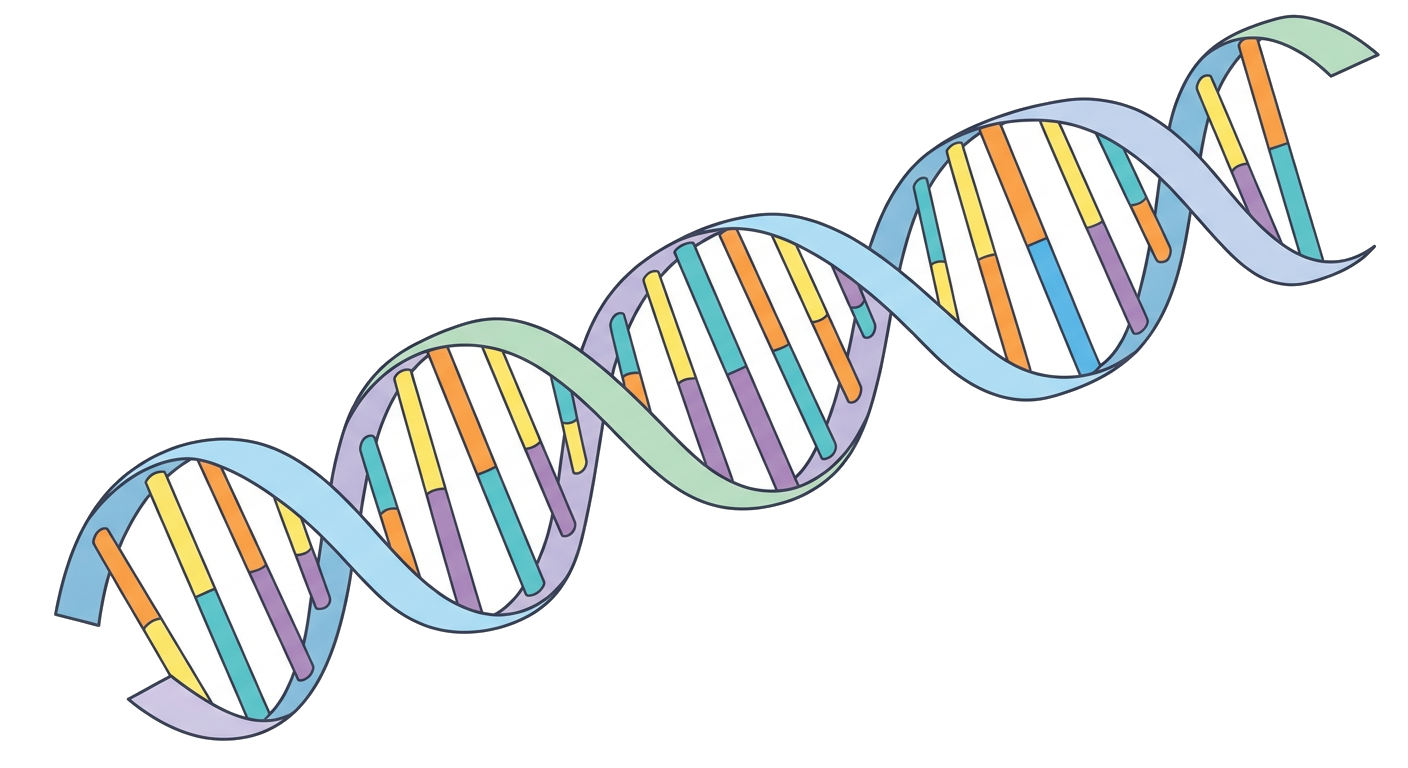
9. Examine the diagram of the DNA double helix below. Label the following components: phosphate group, deoxyribose sugar, and nitrogenous base.
Match each term with its correct definition.
10. Transgenic organism
a. An organism whose genome has been altered by the transfer of a gene or genes from another species or breed.
11. Gene cloning
b. The process of making multiple, identical copies of a particular gene.
12. Plasmid
c. A small, circular, double-stranded DNA molecule that is distinct from a cell's chromosomal DNA.
Related Worksheets
Grade 12 Biology: Dissection Fundamentals
This worksheet covers essential concepts and practices in biological dissection, including safety, tool identification, and ethical considerations for Grade 12 Biology students.
Grade 12 Biology: The Integumentary System
This worksheet covers the structure, function, and common conditions of the human integumentary system for Grade 12 Biology students.
Grade 12 Biology: Heart Rate
This worksheet explores the physiological mechanisms regulating heart rate, factors influencing it, and methods of measurement for Grade 12 Biology students.
Grade 12 Non-Mendelian Inheritance Worksheet
Explore advanced concepts in genetics beyond simple Mendelian patterns, including incomplete dominance, codominance, multiple alleles, and polygenic inheritance.