Genetic Mutation Worksheet
Explore the causes, types, and effects of genetic mutations on organisms and populations.
Includes
Standards
Topics
Genetic Mutation Worksheet
Name:
Date:
Score:
Read each question carefully and answer to the best of your ability. Use complete sentences for short answer questions.
1. Which type of mutation results in a change in a single nucleotide base?
Frameshift mutation
Point mutation
Chromosomal mutation
Duplication mutation
2. What is the primary role of DNA repair mechanisms?
To introduce new mutations
To prevent DNA replication
To correct errors in DNA sequence
To synthesize new proteins
1. A mutation is a type of gene mutation that involves the insertion or deletion of a nucleotide in the DNA sequence.
2. are agents that can cause mutations in DNA.
3. The ultimate source of all new alleles in a population is .
1. Explain the difference between a somatic mutation and a germline mutation. Provide an example of the potential impact of each.
2. Describe how a silent mutation differs from a missense mutation and a nonsense mutation. Which type is most likely to have a significant impact on protein function?
1. All mutations are harmful to an organism.
True
False
2. Mutations can occur spontaneously during DNA replication.
True
False
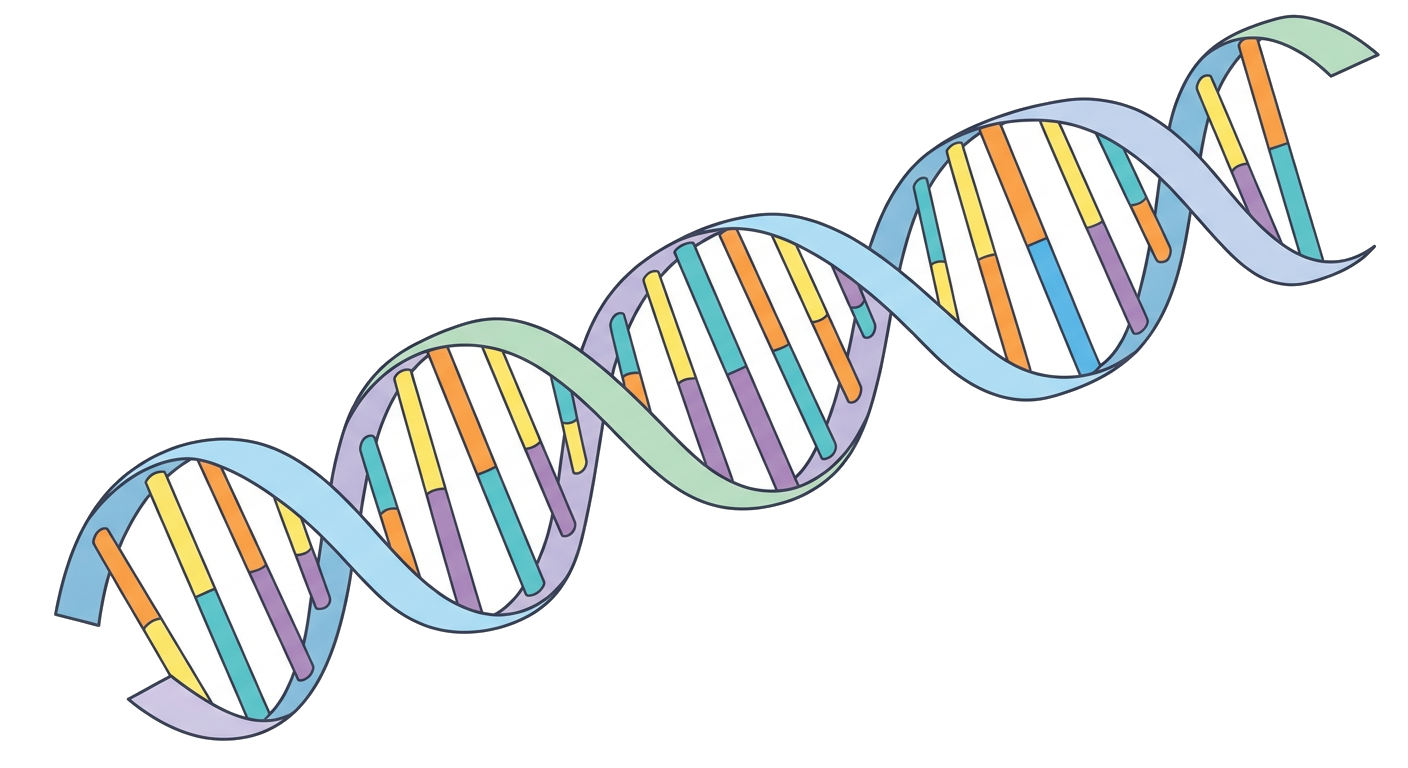
Observe the diagram of the DNA double helix below. If a point mutation occurred at the indicated base pair, changing Adenine (A) to Guanine (G), what would be the likely consequence for the complementary strand during replication?
Related Worksheets
Grade 12 Biology: Dissection Fundamentals
This worksheet covers essential concepts and practices in biological dissection, including safety, tool identification, and ethical considerations for Grade 12 Biology students.
Grade 12 Biology: The Integumentary System
This worksheet covers the structure, function, and common conditions of the human integumentary system for Grade 12 Biology students.
Grade 12 Biology: Heart Rate
This worksheet explores the physiological mechanisms regulating heart rate, factors influencing it, and methods of measurement for Grade 12 Biology students.
Grade 12 Non-Mendelian Inheritance Worksheet
Explore advanced concepts in genetics beyond simple Mendelian patterns, including incomplete dominance, codominance, multiple alleles, and polygenic inheritance.