Grade 12 Biology: Membrane Structure and Function
This worksheet covers the fundamental aspects of cell membrane structure, function, and various transport mechanisms at a Grade 12 Biology level.
Includes
Standards
Topics
Grade 12 Biology: Membrane Structure and Function
Name:
Date:
Score:
Read each question carefully and provide your best answer. For multiple choice questions, select the best option. For short answer questions, use complete sentences.
1. Which of the following best describes the fluid mosaic model of the cell membrane?
A rigid structure composed primarily of carbohydrates.
A static bilayer of phospholipids with embedded proteins.
A dynamic arrangement of phospholipids and proteins that can move laterally.
A membrane made entirely of proteins, forming a barrier.
2. Which of the following is NOT a primary function of the cell membrane?
Regulating passage of substances
Cell recognition and adhesion
Protein synthesis
Maintaining cell shape and integrity
3. The primary component of the cell membrane is the bilayer.
4. Integral proteins that span the entire membrane are called proteins.
5. The movement of water across a selectively permeable membrane is known as .
6. Active transport requires energy to move substances against their concentration gradient.
True
False
7. Facilitated diffusion requires ATP to move molecules across the membrane.
True
False
8. Describe the role of cholesterol in the cell membrane.
9. Differentiate between endocytosis and exocytosis.
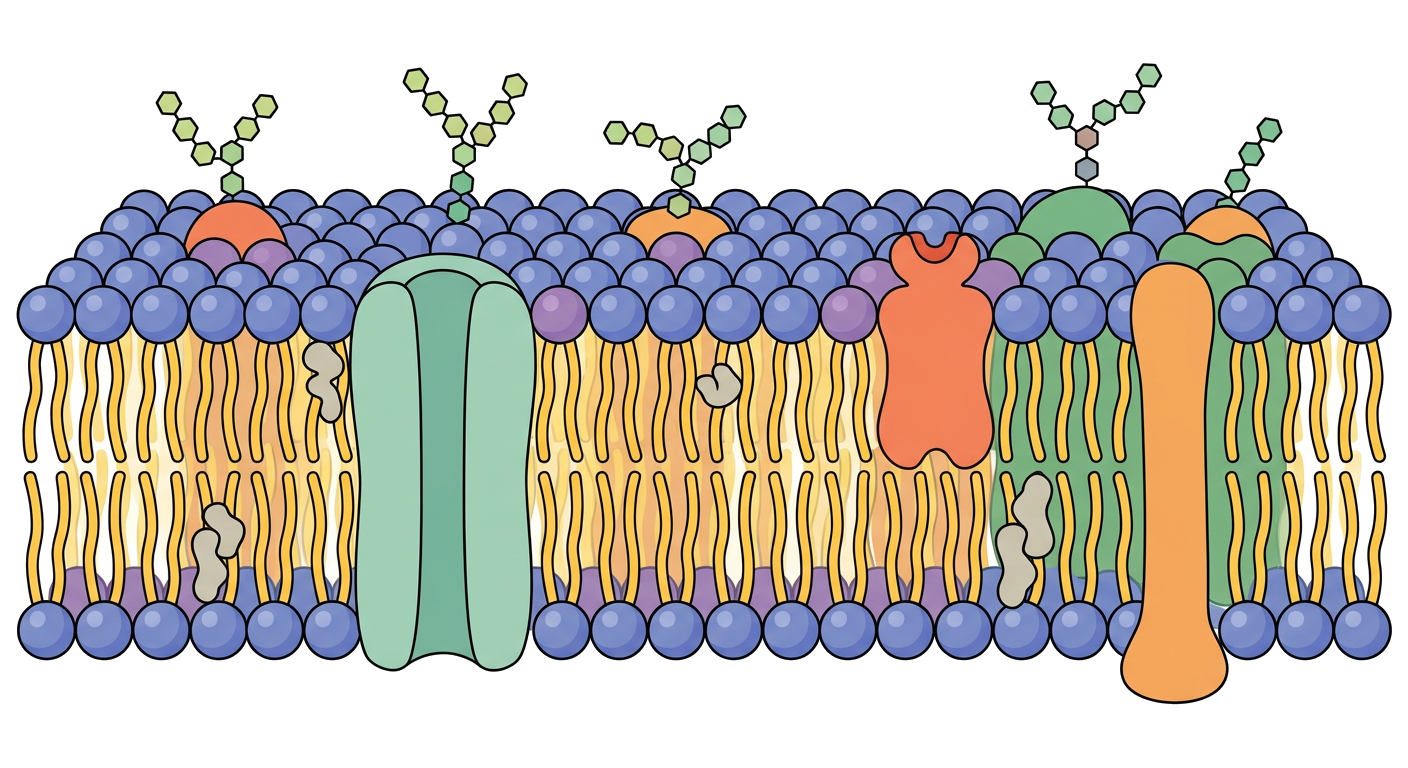
10. Label the following components of the cell membrane in the diagram below:
(a) Phospholipid bilayer (b) Integral protein (c) Peripheral protein (d) Glycoprotein (e) Cholesterol
Related Worksheets
Grade 12 Biology: Dissection Fundamentals
This worksheet covers essential concepts and practices in biological dissection, including safety, tool identification, and ethical considerations for Grade 12 Biology students.
Grade 12 Biology: The Integumentary System
This worksheet covers the structure, function, and common conditions of the human integumentary system for Grade 12 Biology students.
Grade 12 Biology: Heart Rate
This worksheet explores the physiological mechanisms regulating heart rate, factors influencing it, and methods of measurement for Grade 12 Biology students.
Grade 12 Non-Mendelian Inheritance Worksheet
Explore advanced concepts in genetics beyond simple Mendelian patterns, including incomplete dominance, codominance, multiple alleles, and polygenic inheritance.