Muscles and Bones: Advanced Biology Worksheet
Grade 12 Biology worksheet covering the structure and function of the human muscular and skeletal systems, including cellular mechanisms and disorders.
Includes
Standards
Topics
Muscles and Bones: Advanced Biology Worksheet
Name:
Date:
Score:
Read each question carefully and answer to the best of your knowledge. Provide detailed explanations where requested.
1. Which of the following is the primary function of osteoclasts?
Bone formation
Bone resorption
Cartilage production
Hematopoiesis
2. The sliding filament model of muscle contraction describes the interaction between which two proteins?
Collagen and elastin
Actin and myosin
Troponin and tropomyosin
Keratin and melanin
1. The process of bone formation is called .
2. A motor unit consists of a single motor neuron and all the it innervates.
3. The is the functional unit of skeletal muscle contraction.
1. Describe the role of calcium ions in initiating muscle contraction. Include the proteins involved.
2. Explain the difference between compact bone and spongy bone in terms of structure and location.
Examine the diagram of the human skeleton below and answer the questions that follow.
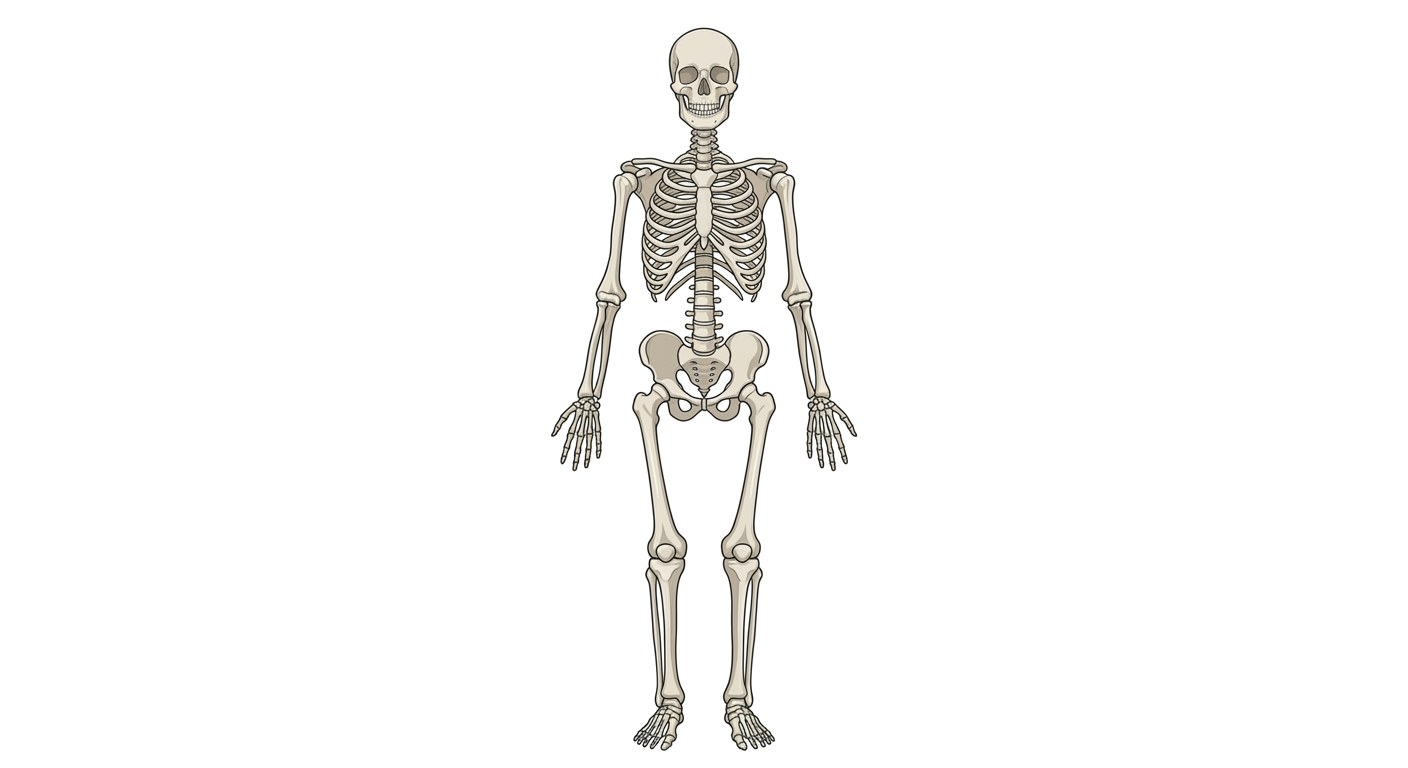
1. Identify two bones that are part of the axial skeleton and two that are part of the appendicular skeleton.
2. What type of joint connects the femur to the pelvis, and what kind of movement does it allow?
1. Tendons connect bone to bone, while ligaments connect muscle to bone.
True
False
2. Smooth muscle tissue is found in the walls of internal organs and is under voluntary control.
True
False
Match the term on the left with its definition on the right.
1. Sarcomere
a. Bone-forming cells
2. Osteoblasts
b. Connective tissue surrounding a fascicle
3. Perimysium
c. Functional unit of muscle contraction
Use the words from the bank to complete the sentences below.
1. The neurotransmitter released at the neuromuscular junction is .
2. Blood vessels and nerves are found within the of compact bone.
3. The entire muscle is surrounded by a dense layer of connective tissue called the .
Related Worksheets
Grade 12 Biology: Dissection Fundamentals
This worksheet covers essential concepts and practices in biological dissection, including safety, tool identification, and ethical considerations for Grade 12 Biology students.
Grade 12 Biology: The Integumentary System
This worksheet covers the structure, function, and common conditions of the human integumentary system for Grade 12 Biology students.
Grade 12 Biology: Heart Rate
This worksheet explores the physiological mechanisms regulating heart rate, factors influencing it, and methods of measurement for Grade 12 Biology students.
Grade 12 Non-Mendelian Inheritance Worksheet
Explore advanced concepts in genetics beyond simple Mendelian patterns, including incomplete dominance, codominance, multiple alleles, and polygenic inheritance.