Origin of Life: Grade 12 Biology
Explore the scientific theories and evidence surrounding the origin of life on Earth, including abiogenesis, early Earth conditions, and key experiments.
Includes
Standards
Topics
Origin of Life: Grade 12 Biology
Name:
Date:
Score:
Read each question carefully and provide thoughtful, detailed answers. For multiple-choice questions, select the best option. For short answer questions, use complete sentences and scientific terminology.
1. Which of the following gases was thought to be absent from Earth's early atmosphere?
Methane (CH4)
Ammonia (NH3)
Oxygen (O2)
Water vapor (H2O)
2. The Miller-Urey experiment demonstrated that:
Life originated from extraterrestrial sources.
Complex organic molecules can form from inorganic precursors.
RNA is the primary genetic material in all life forms.
Photosynthesis was the earliest metabolic pathway.
1. The hypothesis that life originated from non-living matter is known as .
2. Early Earth's atmosphere is believed to have been a atmosphere, meaning it lacked free oxygen.
3. The 'RNA World' hypothesis suggests that was the primary genetic material and catalyst on early Earth.
1. Describe the conditions thought to exist on early Earth that were conducive to the formation of organic molecules. You may refer to the diagram below.
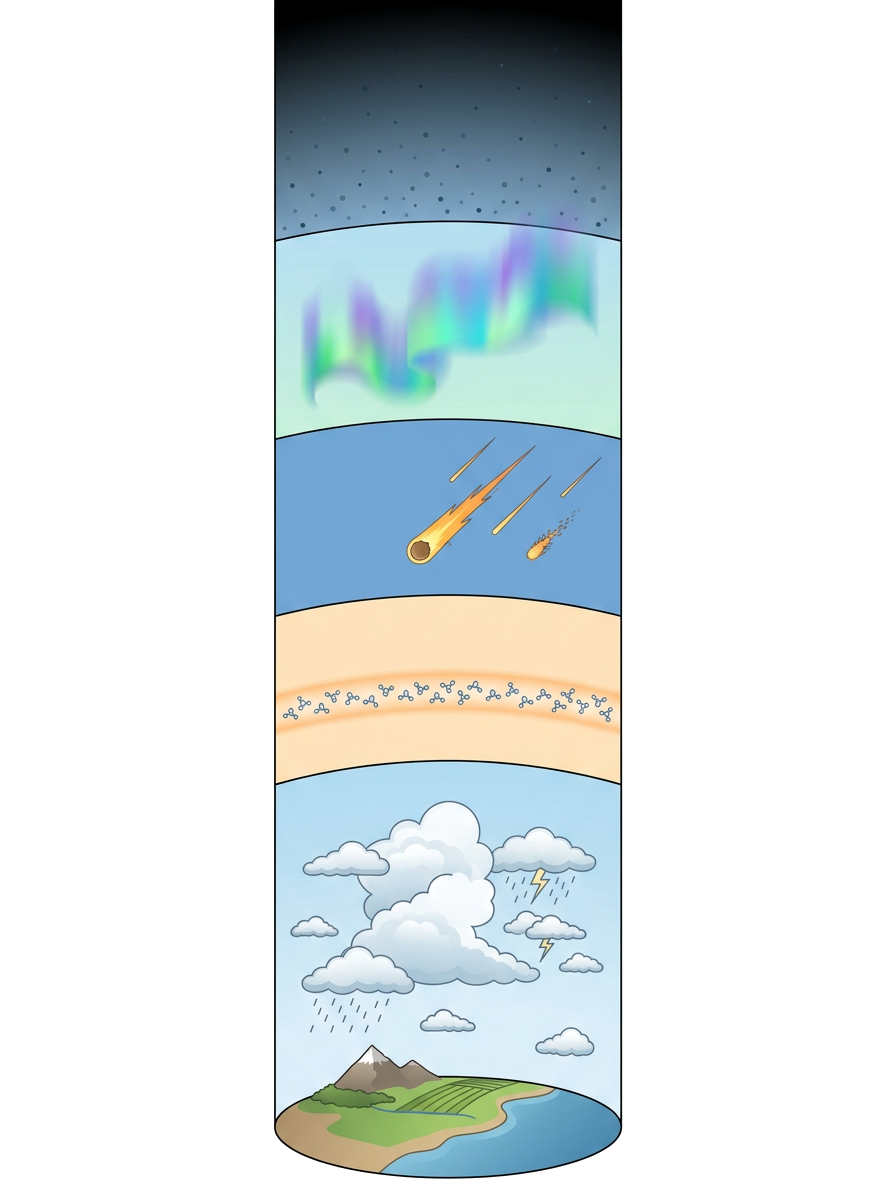
2. Explain the significance of hydrothermal vents in the context of the origin of life.
1. All modern scientific theories agree that life on Earth originated through spontaneous generation.
True
False
2. The presence of ozone (O3) in the early Earth's atmosphere was crucial for the formation of the first life forms.
True
False
Discuss the major scientific hypotheses regarding the origin of life on Earth. Compare and contrast at least two prominent theories, providing evidence and challenges for each. (Minimum 5 sentences)
Related Worksheets
Grade 12 Biology: Dissection Fundamentals
This worksheet covers essential concepts and practices in biological dissection, including safety, tool identification, and ethical considerations for Grade 12 Biology students.
Grade 12 Biology: The Integumentary System
This worksheet covers the structure, function, and common conditions of the human integumentary system for Grade 12 Biology students.
Grade 12 Biology: Heart Rate
This worksheet explores the physiological mechanisms regulating heart rate, factors influencing it, and methods of measurement for Grade 12 Biology students.
Grade 12 Non-Mendelian Inheritance Worksheet
Explore advanced concepts in genetics beyond simple Mendelian patterns, including incomplete dominance, codominance, multiple alleles, and polygenic inheritance.