Light Microscope Components
A Grade 12 science worksheet covering the essential parts and functions of a light microscope, including identification, true/false, and short answer questions.
Includes
Standards
Topics
Light Microscope Components
Name:
Date:
Score:
Read each question carefully and provide your best answer. Refer to the diagram of the light microscope when necessary.
Study the diagram of a light microscope below:
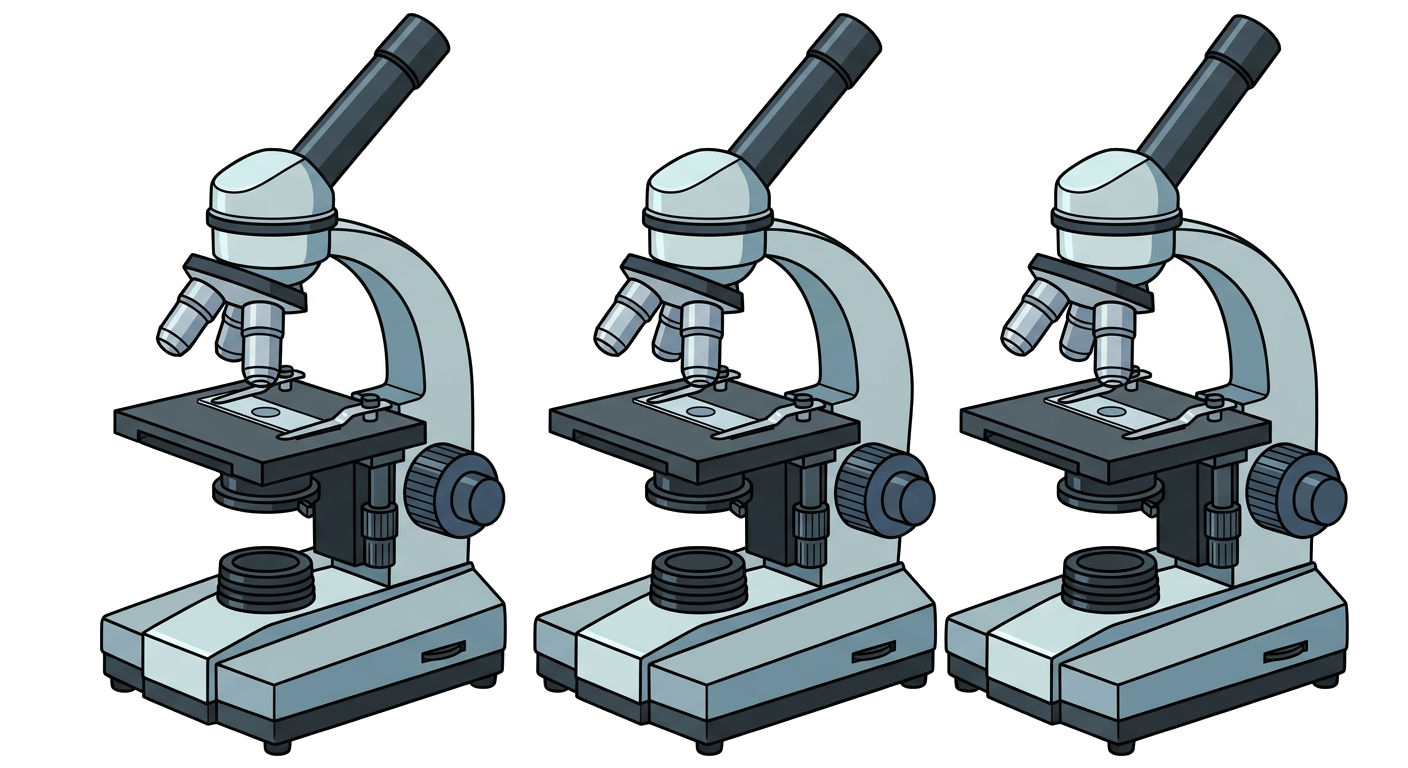
1. Which part of the microscope regulates the amount of light passing through the specimen?
Eyepiece
Diaphragm
Objective lens
Stage
2. Which of the following lenses is responsible for the initial magnification of the specimen?
Eyepiece lens
Condenser lens
Objective lens
Light source
1. The coarse adjustment knob should be used with the high power objective lens for fine focusing.
True
False
2. The revolving nosepiece holds the eyepiece lenses and allows for easy switching between them.
True
False
1. The is the platform where the microscope slide is placed for viewing.
2. To increase the brightness of the field of view, you would adjust the or the condenser.
1. Describe the primary function of the fine adjustment knob.
2. Explain why it is important to always start viewing a specimen under the lowest power objective lens.
Related Worksheets
Grade 12 Biology: Dissection Fundamentals
This worksheet covers essential concepts and practices in biological dissection, including safety, tool identification, and ethical considerations for Grade 12 Biology students.
Grade 12 Biology: The Integumentary System
This worksheet covers the structure, function, and common conditions of the human integumentary system for Grade 12 Biology students.
Grade 12 Biology: Heart Rate
This worksheet explores the physiological mechanisms regulating heart rate, factors influencing it, and methods of measurement for Grade 12 Biology students.
Grade 12 Non-Mendelian Inheritance Worksheet
Explore advanced concepts in genetics beyond simple Mendelian patterns, including incomplete dominance, codominance, multiple alleles, and polygenic inheritance.