Grade 12 Biology: Passive Transport
This worksheet covers key concepts of passive transport, including diffusion, osmosis, and facilitated diffusion, relevant for Grade 12 Biology students.
Includes
Standards
Topics
Grade 12 Biology: Passive Transport
Name:
Date:
Score:
Read each question carefully and provide your best answer. This worksheet assesses your understanding of passive transport mechanisms in cell biology.
1. Which of the following processes does NOT require cellular energy?
Active Transport
Facilitated Diffusion
Endocytosis
Exocytosis
2. The movement of water across a selectively permeable membrane from an area of high water concentration to an area of low water concentration is called:
Diffusion
Osmosis
Active Transport
Facilitated Diffusion
3. Passive transport relies on the of substances down their concentration gradient.
4. In , a carrier protein or channel protein helps move substances across the membrane without using energy.
5. Briefly explain the difference between simple diffusion and facilitated diffusion. Provide an example of a substance that moves by each method.
6. Describe what happens to an animal cell when it is placed in a hypotonic solution. What is the role of osmosis in this process?
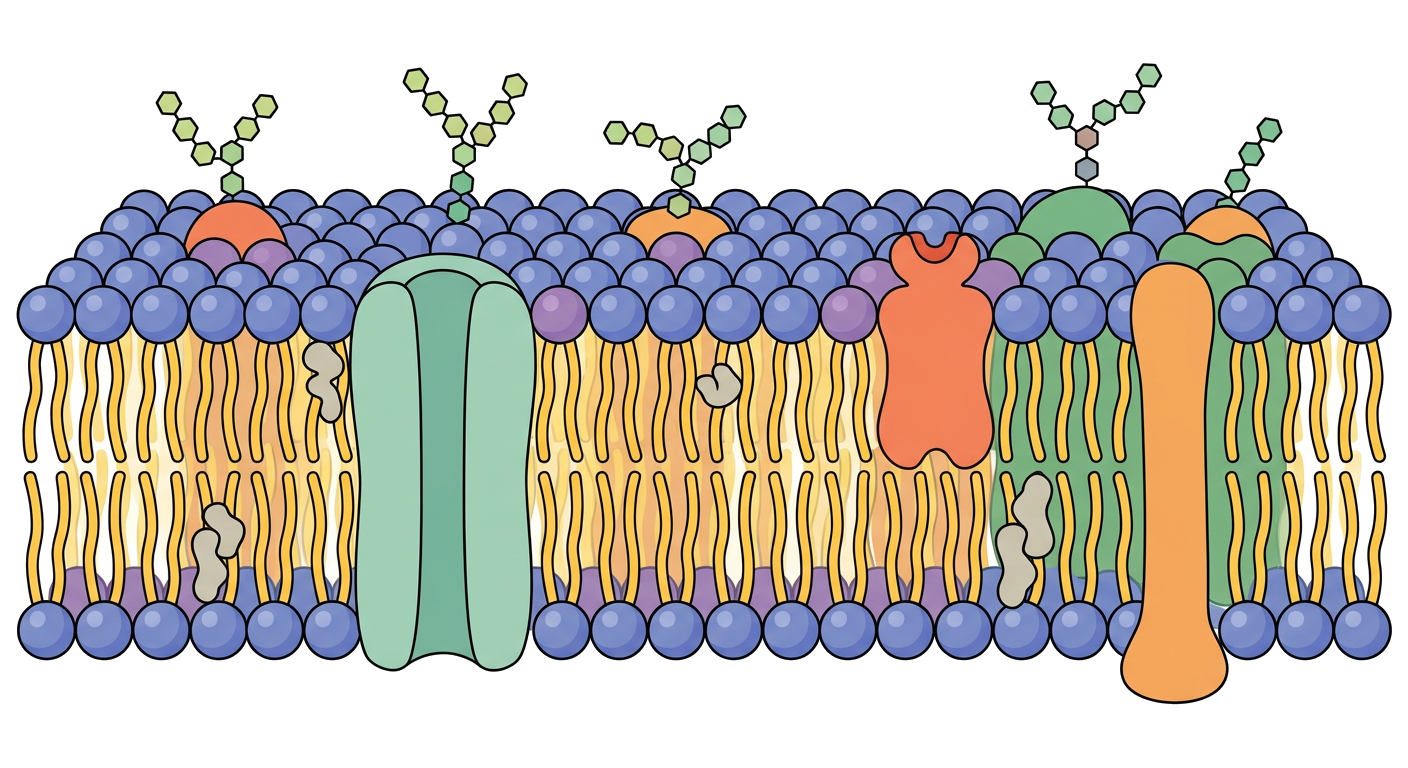
7. Examine the diagram of the cell membrane below. Identify and label the components involved in passive transport.
8. Passive transport can move substances against their concentration gradient.
True
False
9. Oxygen and carbon dioxide typically move across the cell membrane via simple diffusion.
True
False
Match the term on the left with its definition on the right.
10. Diffusion
a. Movement of water across a semipermeable membrane.
11. Osmosis
b. Movement of solutes from high to low concentration.
12. Facilitated Diffusion
c. Uses carrier proteins to move substances down concentration gradient.
Related Worksheets
Grade 12 Biology: Dissection Fundamentals
This worksheet covers essential concepts and practices in biological dissection, including safety, tool identification, and ethical considerations for Grade 12 Biology students.
Grade 12 Biology: The Integumentary System
This worksheet covers the structure, function, and common conditions of the human integumentary system for Grade 12 Biology students.
Grade 12 Biology: Heart Rate
This worksheet explores the physiological mechanisms regulating heart rate, factors influencing it, and methods of measurement for Grade 12 Biology students.
Grade 12 Non-Mendelian Inheritance Worksheet
Explore advanced concepts in genetics beyond simple Mendelian patterns, including incomplete dominance, codominance, multiple alleles, and polygenic inheritance.