Pathogenic Microorganisms Worksheet
Grade 12 Science worksheet covering the characteristics, transmission, and impact of pathogenic microorganisms including bacteria, viruses, fungi, and protozoa.
Includes
Standards
Topics
Pathogenic Microorganisms
Name:
Date:
Score:
Read each question carefully and answer to the best of your ability. Show all your work where applicable.
1. Which of the following is NOT a characteristic of a virus?
Contains genetic material (DNA or RNA)
Possesses a cell wall and ribosomes
Requires a host cell for replication
Is typically much smaller than bacteria
2. Pathogenic bacteria can cause disease by producing , which are harmful substances, or by directly damaging host .
3. Fungal infections are often called , and they can affect various parts of the body, including the skin, nails, and internal organs.
4. Briefly explain the difference between a prokaryotic and eukaryotic pathogen, providing an example of each.
5. Describe two common modes of transmission for pathogenic microorganisms and provide an example for each.
6. All microorganisms are pathogenic and cause disease.
True
False
Match each type of microorganism with its description.
7. Bacteria
a. Non-living infectious agent, requires host cell
8. Virus
b. Single-celled prokaryotic organisms
9. Fungi
c. Eukaryotic organisms, can be single-celled or multicellular
10. Protozoa
d. Single-celled eukaryotic organisms, often motile
11. Observe the diagram below:
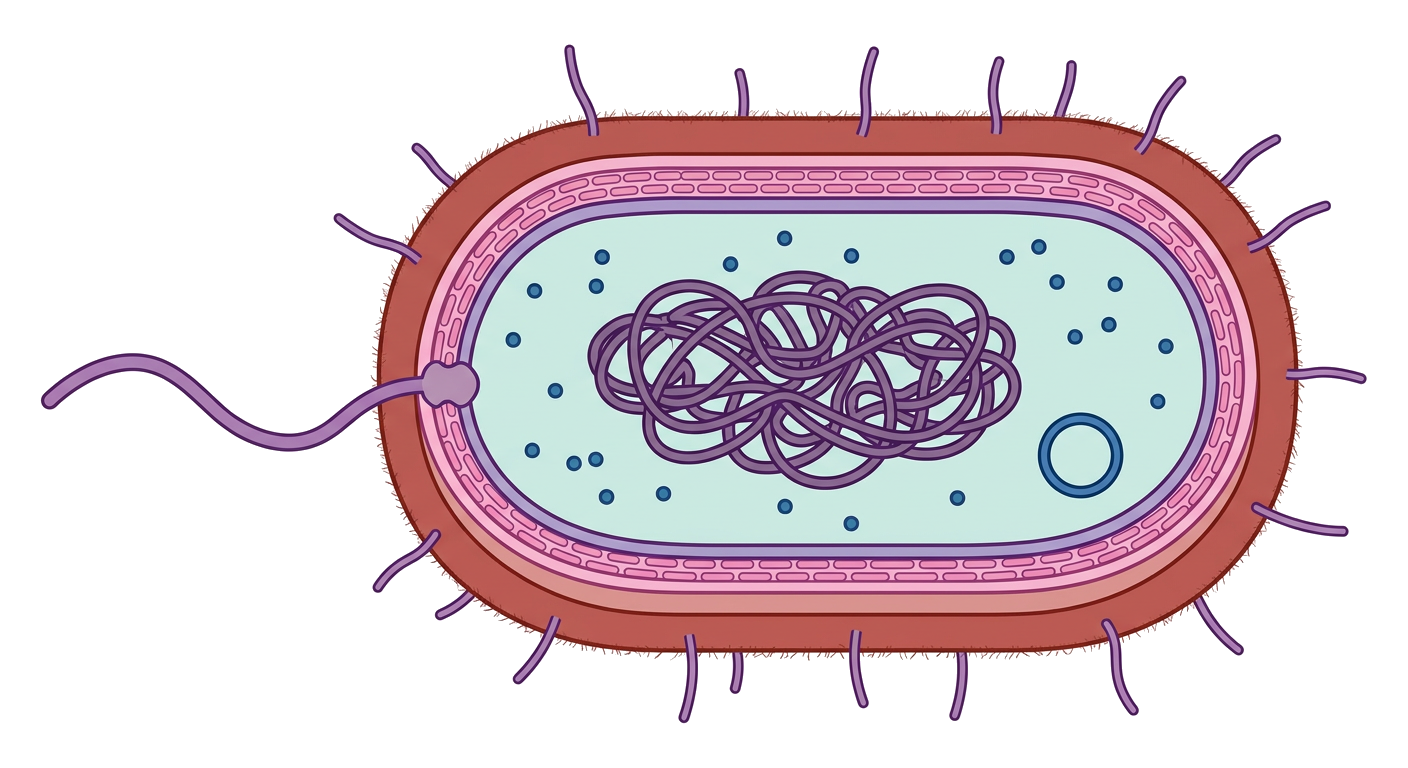
Based on the image, identify two key structures of this microorganism and explain their function.
Related Worksheets
Grade 12 Biology: Dissection Fundamentals
This worksheet covers essential concepts and practices in biological dissection, including safety, tool identification, and ethical considerations for Grade 12 Biology students.
Grade 12 Biology: The Integumentary System
This worksheet covers the structure, function, and common conditions of the human integumentary system for Grade 12 Biology students.
Grade 12 Biology: Heart Rate
This worksheet explores the physiological mechanisms regulating heart rate, factors influencing it, and methods of measurement for Grade 12 Biology students.
Grade 12 Non-Mendelian Inheritance Worksheet
Explore advanced concepts in genetics beyond simple Mendelian patterns, including incomplete dominance, codominance, multiple alleles, and polygenic inheritance.