Patterns of Inheritance Worksheet
Grade 12 Biology worksheet covering patterns of inheritance including Mendelian genetics, non-Mendelian inheritance, and pedigree analysis.
Includes
Standards
Topics
Patterns of Inheritance
Name:
Date:
Score:
Read each question carefully and provide your best answer. Show all your work for genetics problems.
1. Which of the following describes an organism that has two different alleles for a particular trait?
Homozygous recessive
Homozygous dominant
Heterozygous
Phenotypic
2. In a dihybrid cross involving two unlinked genes, what is the expected phenotypic ratio in the F2 generation if both parents are heterozygous for both traits?
3:1
1:2:1
9:3:3:1
1:1:1:1
1. The physical expression of an organism's genes is called its .
2. When a single gene affects multiple phenotypic traits, it is called .
3. The inheritance pattern where both alleles are expressed equally and separately in the heterozygote is known as .
1. In pea plants, tall (T) is dominant over dwarf (t). If a homozygous tall plant is crossed with a dwarf plant, what will be the genotype and phenotype of the F1 generation? Use a Punnett Square to illustrate.
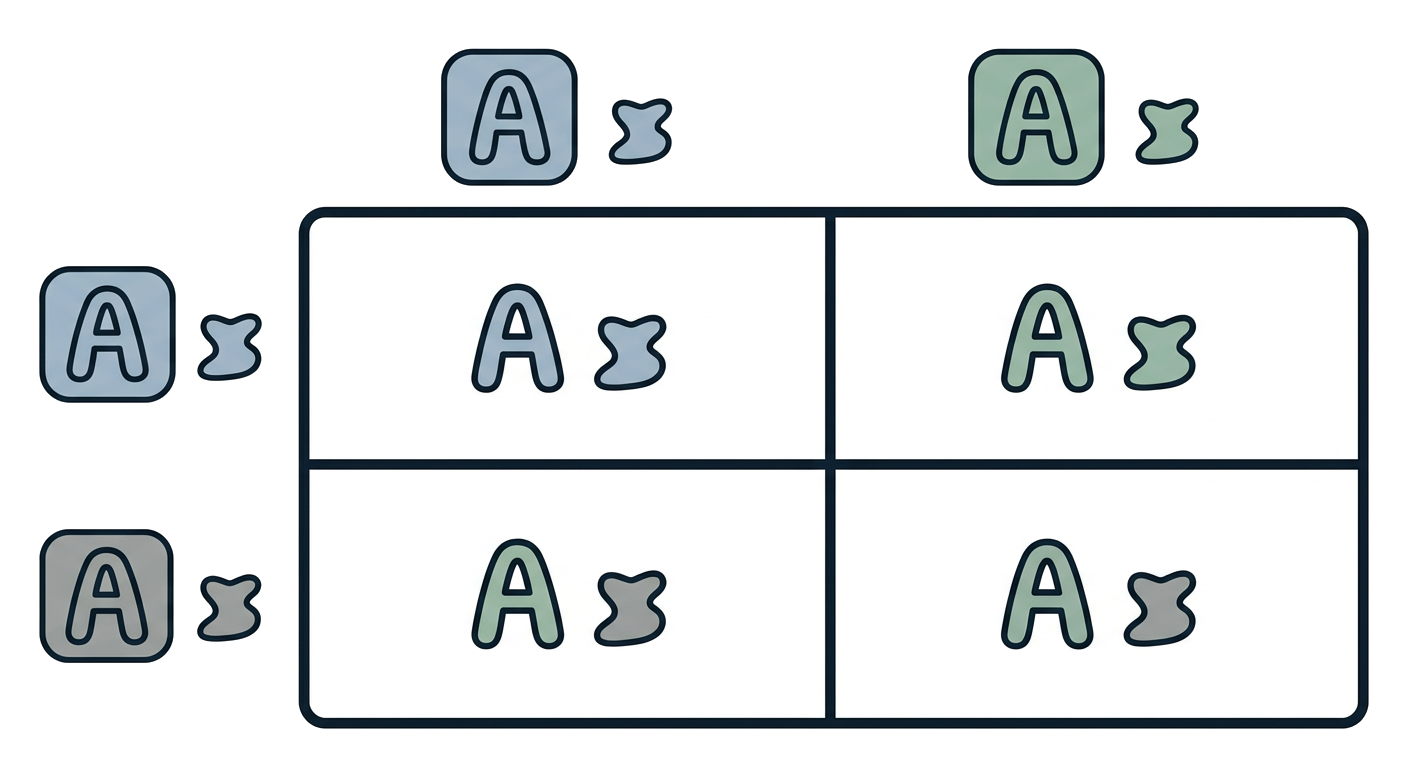
2. Explain the difference between complete dominance, incomplete dominance, and codominance. Provide an example for each.
1. Linked genes always assort independently during meiosis.
True
False
2. A pedigree chart is used to trace the inheritance of a trait through several generations of a family.
True
False
Match the term with its definition.
1. Allele
a. The genetic makeup of an organism
2. Genotype
b. An alternative form of a gene
3. Phenotype
c. The observable characteristics of an organism
1. Discuss the concept of sex-linked inheritance. Describe a specific human genetic disorder that follows a sex-linked inheritance pattern, including its symptoms and how it is inherited.
Related Worksheets
Grade 12 Biology: Dissection Fundamentals
This worksheet covers essential concepts and practices in biological dissection, including safety, tool identification, and ethical considerations for Grade 12 Biology students.
Grade 12 Biology: The Integumentary System
This worksheet covers the structure, function, and common conditions of the human integumentary system for Grade 12 Biology students.
Grade 12 Biology: Heart Rate
This worksheet explores the physiological mechanisms regulating heart rate, factors influencing it, and methods of measurement for Grade 12 Biology students.
Grade 12 Non-Mendelian Inheritance Worksheet
Explore advanced concepts in genetics beyond simple Mendelian patterns, including incomplete dominance, codominance, multiple alleles, and polygenic inheritance.