Population Genetics Worksheet
Explore the fundamental principles of population genetics, including allele frequencies, genetic variation, and the forces that drive evolutionary change in populations.
Includes
Standards
Population Genetics: Grade 12
Name:
Date:
Score:
Read each question carefully and provide your best answer. Show all your work for calculations.
1. Which of the following is NOT a condition for Hardy-Weinberg equilibrium?
No mutation
Random mating
Small population size
No gene flow
2. Genetic drift is most significant in populations that are:
Large and stable
Small and isolated
Under strong natural selection
Experiencing high gene flow
1. The total aggregate of genes in a population at any one time is called the .
2. is the transfer of alleles or genes from one population to another.
3. The primary source of new alleles in a population is .
1. Explain the concept of allele frequency and how it is calculated.
2. Describe the bottleneck effect and its impact on genetic diversity within a population.
1. Natural selection always leads to an increase in genetic variation.
True
False
2. The Hardy-Weinberg principle can be used to estimate genotype frequencies in a population.
True
False
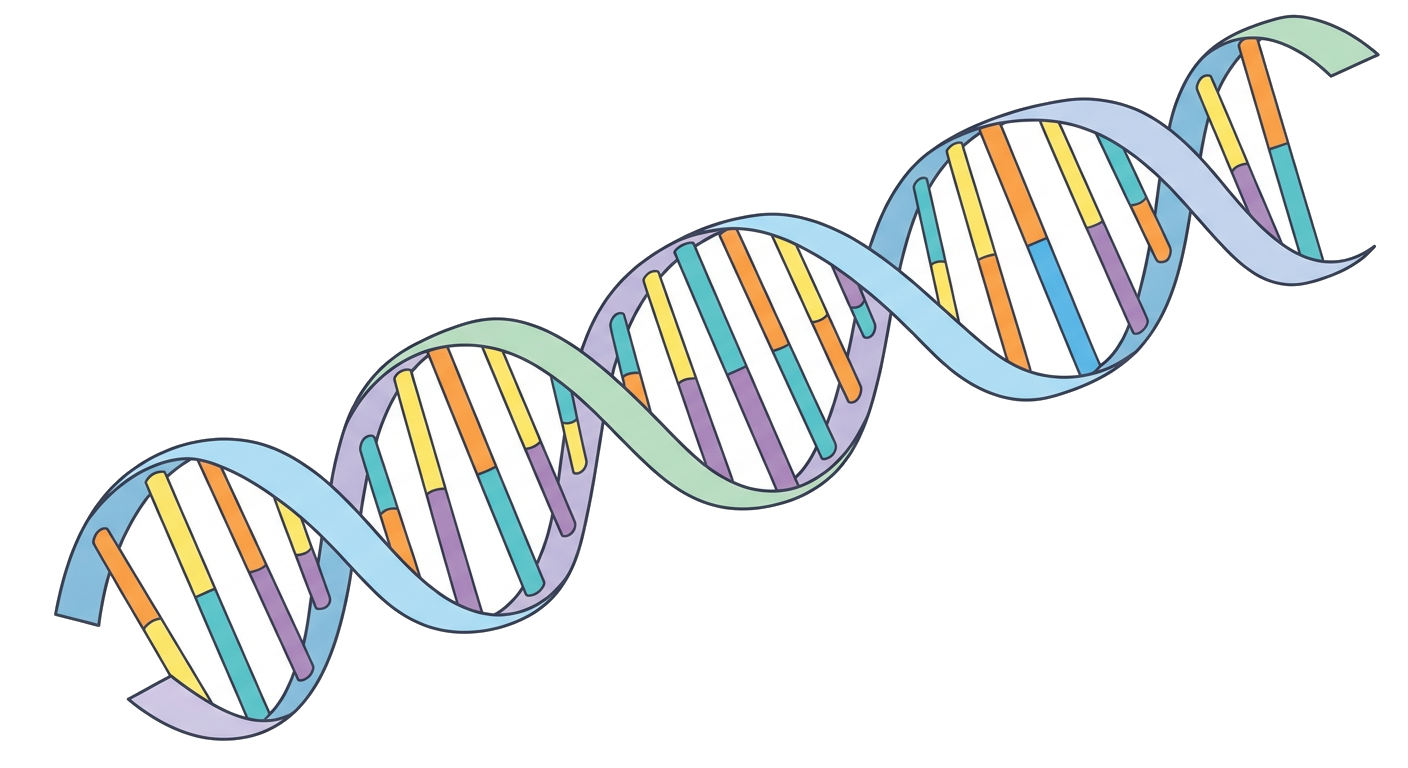
Examine the image of the DNA double helix below. Briefly explain how mutations in this structure can lead to changes in allele frequencies within a population.
Related Worksheets
Grade 12 Biology: Dissection Fundamentals
This worksheet covers essential concepts and practices in biological dissection, including safety, tool identification, and ethical considerations for Grade 12 Biology students.
Grade 12 Biology: The Integumentary System
This worksheet covers the structure, function, and common conditions of the human integumentary system for Grade 12 Biology students.
Grade 12 Biology: Heart Rate
This worksheet explores the physiological mechanisms regulating heart rate, factors influencing it, and methods of measurement for Grade 12 Biology students.
Grade 12 Non-Mendelian Inheritance Worksheet
Explore advanced concepts in genetics beyond simple Mendelian patterns, including incomplete dominance, codominance, multiple alleles, and polygenic inheritance.