Radioactivity and Wildlife: Impact and Adaptation
A Grade 12 science worksheet exploring the effects of radioactivity on wildlife, including biological impacts, genetic mutations, and ecological consequences.
Includes
Standards
Topics
Radioactivity and Wildlife: Impact and Adaptation
Name:
Date:
Score:
Read each question carefully and provide thoughtful, detailed answers. This worksheet assesses your understanding of the impact of radioactivity on various ecosystems and wildlife.
1. Which type of radiation is most likely to cause direct DNA damage due to its high penetrating power?
Alpha particles
Beta particles
Gamma rays
Neutron radiation
2. Bioaccumulation of radioactive isotopes refers to:
The increase in concentration of radioactive substances in an organism over its lifetime.
The transfer of radioactive substances from one trophic level to the next.
The breakdown of radioactive substances by biological processes.
The natural decay of radioactive elements in the environment.
3. Radiation can induce genetic mutations, leading to changes in the of an organism.
4. The Chernobyl Exclusion Zone has become a unique natural laboratory for studying the long-term effects of radiation on populations.
5. Chronic exposure to low doses of radiation is always less harmful than acute exposure to high doses.
True
False
6. Some organisms have developed adaptive mechanisms to cope with increased radiation levels in contaminated environments.
True
False
7. Explain the concept of biomagnification in the context of radioactive contamination in an ecosystem. Provide an example of how this might occur.
8. Describe at least two physiological or genetic effects that high levels of radiation can have on individual organisms within a contaminated environment.
9. Observe the image below. This represents a generic animal cell. Briefly explain how radiation might directly impact the components of this cell to cause damage at a cellular level.
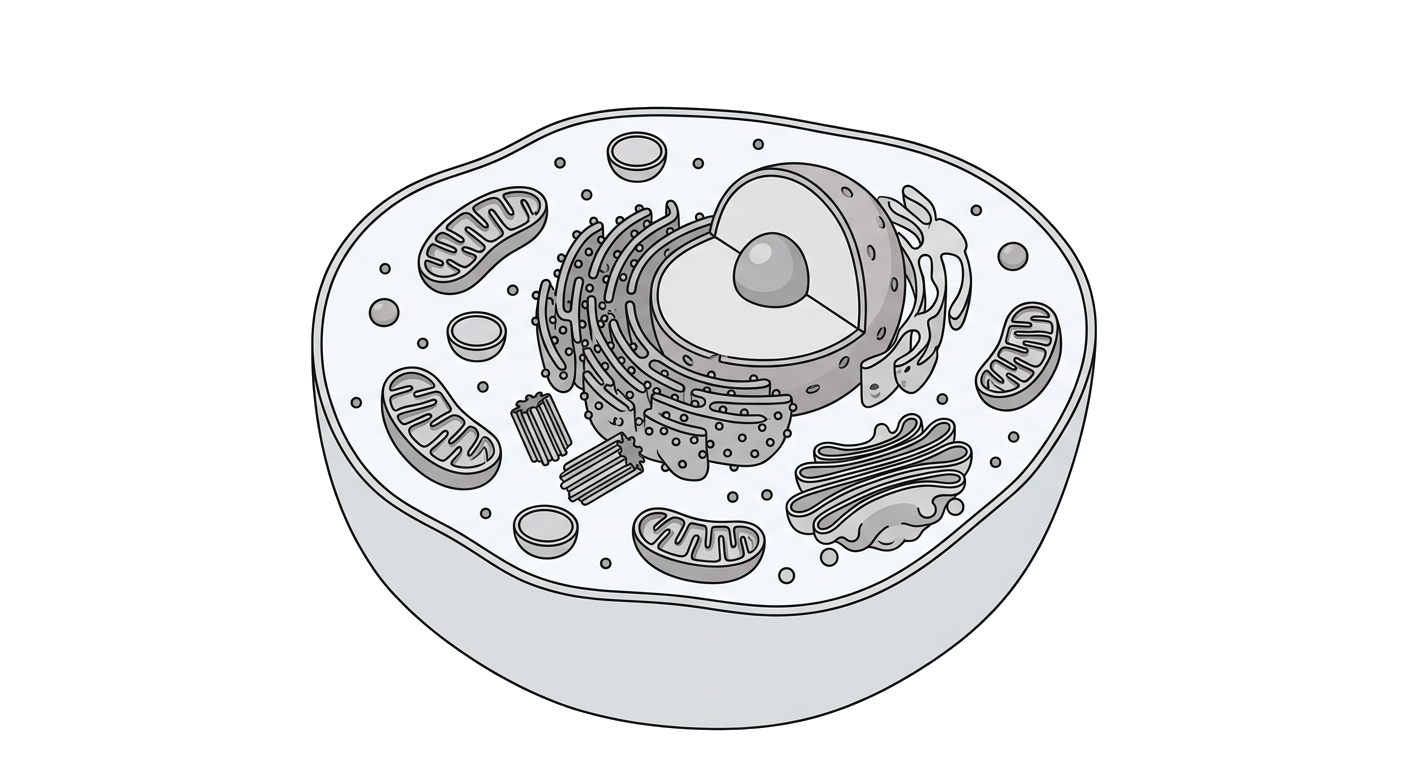
10. Discuss the long-term ecological consequences of a major radioactive contamination event on a terrestrial ecosystem. Consider impacts on biodiversity, population dynamics, and ecosystem services. What potential recovery mechanisms might be observed?
Related Worksheets
Grade 12 Biology: Dissection Fundamentals
This worksheet covers essential concepts and practices in biological dissection, including safety, tool identification, and ethical considerations for Grade 12 Biology students.
Grade 12 Biology: The Integumentary System
This worksheet covers the structure, function, and common conditions of the human integumentary system for Grade 12 Biology students.
Grade 12 Biology: Heart Rate
This worksheet explores the physiological mechanisms regulating heart rate, factors influencing it, and methods of measurement for Grade 12 Biology students.
Grade 12 Non-Mendelian Inheritance Worksheet
Explore advanced concepts in genetics beyond simple Mendelian patterns, including incomplete dominance, codominance, multiple alleles, and polygenic inheritance.