Standard Plate Count Worksheet
A Grade 12 Science worksheet focused on understanding and applying the Standard Plate Count method in microbiology.
Includes
Standards
Topics
Standard Plate Count Worksheet
Name:
Date:
Score:
Read each question carefully and answer to the best of your ability. Show all calculations where necessary.
1. What is the primary purpose of performing a Standard Plate Count (SPC)?
To identify specific bacterial species.
To determine the total viable bacterial population in a sample.
To test the antibiotic resistance of bacteria.
To observe bacterial morphology.
2. Which of the following is NOT a common dilution factor used in SPC?
1:10
1:100
1:1000
1:5
1. The acceptable range for colony counts on a plate for SPC is typically between and colonies.
2. Serial dilutions are performed to reduce the bacterial concentration to a countable range, preventing plates.
3. After inoculation, petri dishes are incubated at an optimal temperature for bacterial growth, usually around °C.
1. Explain why 'colony-forming units' (CFU) are used instead of 'number of cells' when reporting SPC results.
2. Describe the potential sources of error in a Standard Plate Count experiment.
A microbiologist performs a Standard Plate Count on a water sample. They take 1 mL of the sample and perform a series of 1:10 dilutions. After plating 0.1 mL from the 10^-5 dilution onto an agar plate, they count 45 colonies after incubation.
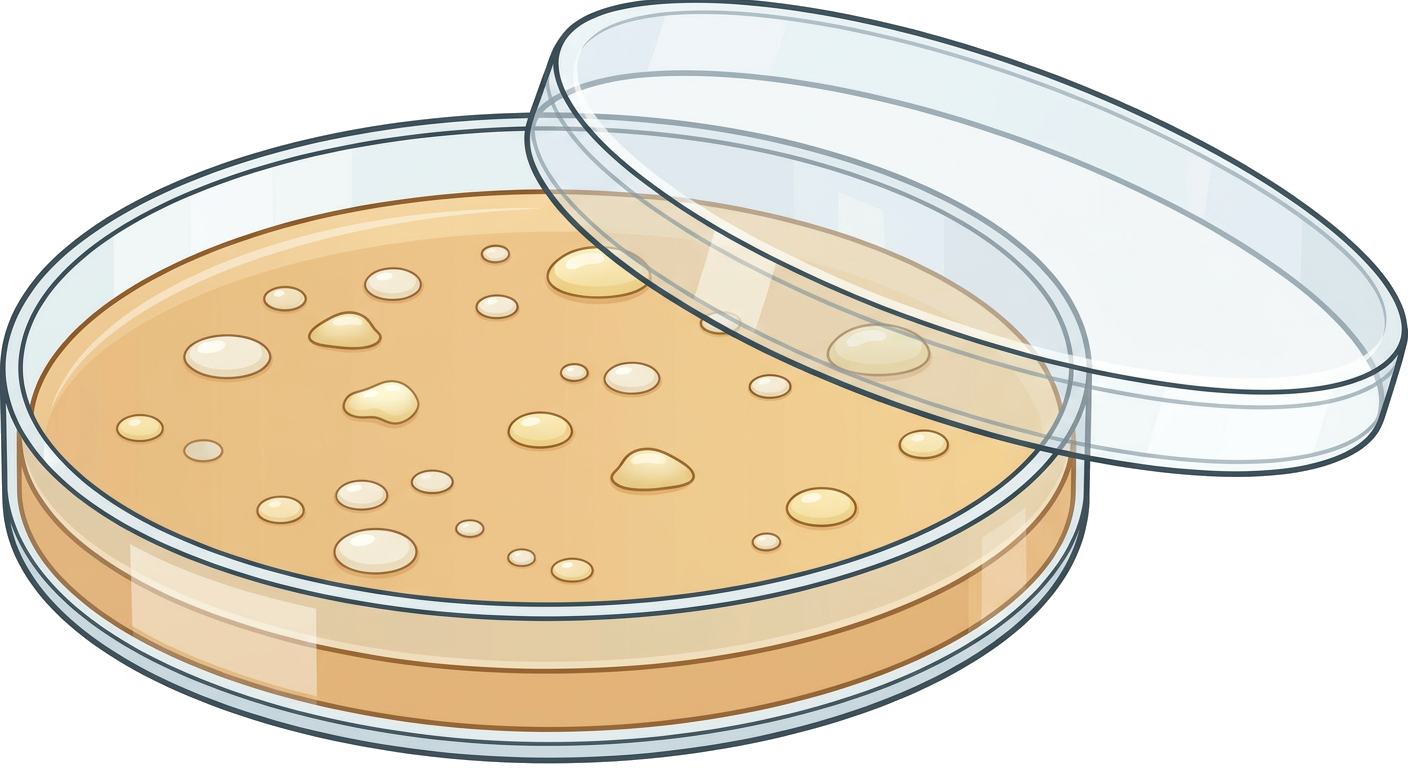
1. Calculate the original concentration of bacteria in the water sample (CFU/mL). Show your work.
1. The pour plate method is generally preferred over the spread plate method for heat-sensitive microorganisms.
True
False
2. All bacteria present in a sample will grow and form colonies on a standard agar plate.
True
False
Related Worksheets
Grade 12 Biology: Dissection Fundamentals
This worksheet covers essential concepts and practices in biological dissection, including safety, tool identification, and ethical considerations for Grade 12 Biology students.
Grade 12 Biology: The Integumentary System
This worksheet covers the structure, function, and common conditions of the human integumentary system for Grade 12 Biology students.
Grade 12 Biology: Heart Rate
This worksheet explores the physiological mechanisms regulating heart rate, factors influencing it, and methods of measurement for Grade 12 Biology students.
Grade 12 Non-Mendelian Inheritance Worksheet
Explore advanced concepts in genetics beyond simple Mendelian patterns, including incomplete dominance, codominance, multiple alleles, and polygenic inheritance.