Grade 12 Biology: Water Potential
This worksheet covers key concepts of water potential, including its components, calculation, and role in plant and animal cells.
Includes
Standards
Topics
Grade 12 Biology: Water Potential
Name:
Date:
Score:
Read each question carefully and provide your best answer. Show all calculations where necessary.
1. Which of the following best describes water potential?
The kinetic energy of water molecules moving randomly.
The potential energy of water molecules, determining the direction of water movement.
The pressure exerted by water on a cell wall.
The concentration of solutes in a solution.
2. What is the solute potential of pure water?
Always positive.
Always negative.
Zero.
Dependent on temperature.
1. Water always moves from an area of higher water potential to an area of water potential.
2. In a plant cell, the vacuole plays a crucial role in maintaining pressure.
1. Explain the difference between solute potential and pressure potential. How do they contribute to the overall water potential?
2. Observe the diagram of a plant cell below. Briefly describe the state of the cell if it were placed in a hypertonic solution, relating your answer to water potential.
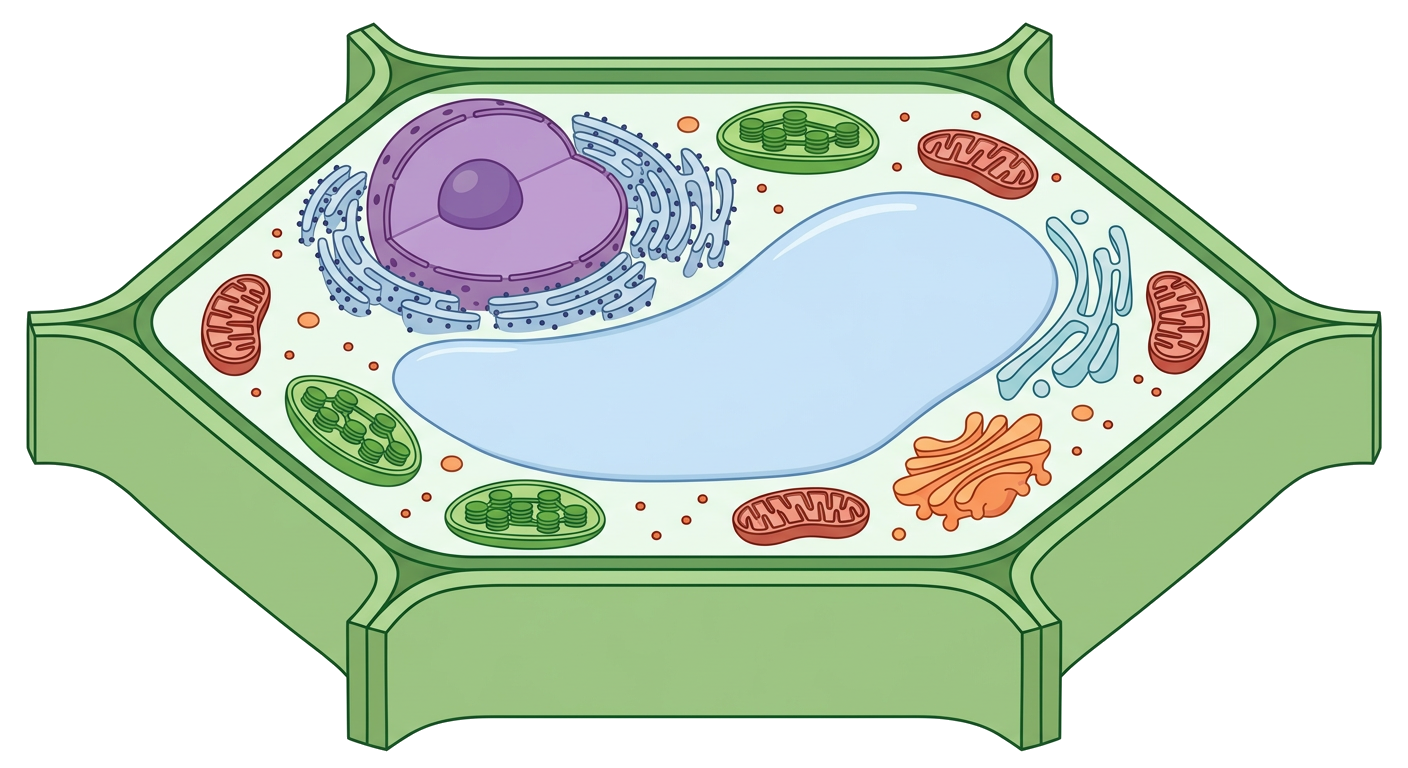
1. A solution with a higher solute concentration has a higher (less negative) solute potential.
True
False
2. Turgor pressure is a component of pressure potential in animal cells.
True
False
Match each term on the left with its definition on the right.
1. Solute Potential
a. The pressure exerted by the cell wall on the protoplast.
2. Pressure Potential
b. The tendency of water to move due to the presence of solutes.
3. Turgid
c. A plant cell that is swollen due to water uptake.
Related Worksheets
Grade 12 Biology: Dissection Fundamentals
This worksheet covers essential concepts and practices in biological dissection, including safety, tool identification, and ethical considerations for Grade 12 Biology students.
Grade 12 Biology: The Integumentary System
This worksheet covers the structure, function, and common conditions of the human integumentary system for Grade 12 Biology students.
Grade 12 Biology: Heart Rate
This worksheet explores the physiological mechanisms regulating heart rate, factors influencing it, and methods of measurement for Grade 12 Biology students.
Grade 12 Non-Mendelian Inheritance Worksheet
Explore advanced concepts in genetics beyond simple Mendelian patterns, including incomplete dominance, codominance, multiple alleles, and polygenic inheritance.