Grade 12 Heart Dissection Worksheet
A worksheet for Grade 12 Biology students focusing on the anatomy and function of the mammalian heart through dissection.
Includes
Standards
Topics
Grade 12 Heart Dissection Worksheet
Name:
Date:
Score:
Carefully read each question and provide thorough answers. Refer to your dissection specimen and notes as needed.
1. Observe the external surface of the heart. Describe the appearance and texture of the pericardium. What is its function?
2. Identify the major blood vessels entering and exiting the heart. Name three of these vessels and state the chamber they are connected to.
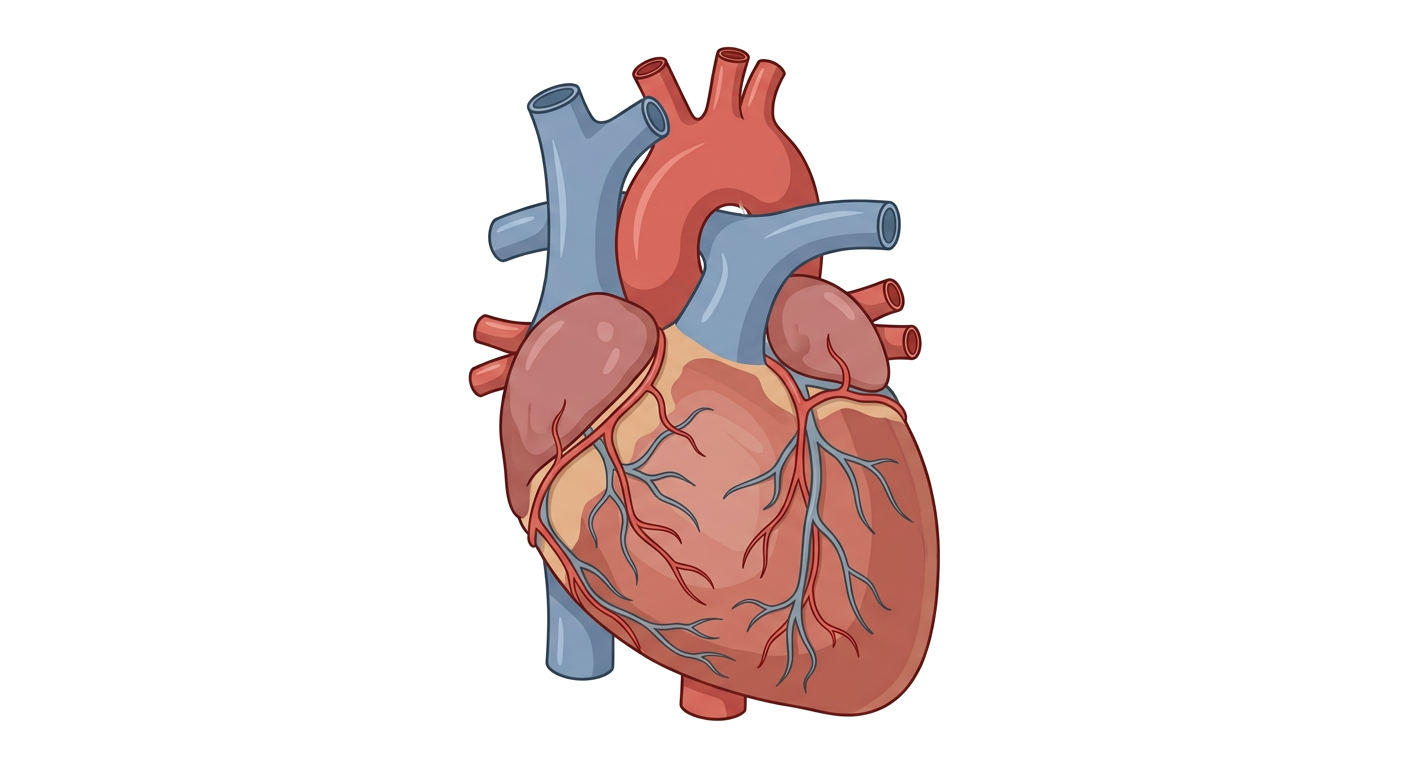
3. Using the diagram above, label the following external structures: Aorta, Pulmonary Artery, Superior Vena Cava, Inferior Vena Cava, Apex.
1. The right atrium receives deoxygenated blood from the body via the and the .
2. The valve located between the right atrium and right ventricle is the valve.
3. The thick muscular wall that separates the right and left ventricles is called the .
4. Oxygenated blood leaves the left ventricle and enters the to be distributed to the rest of the body.
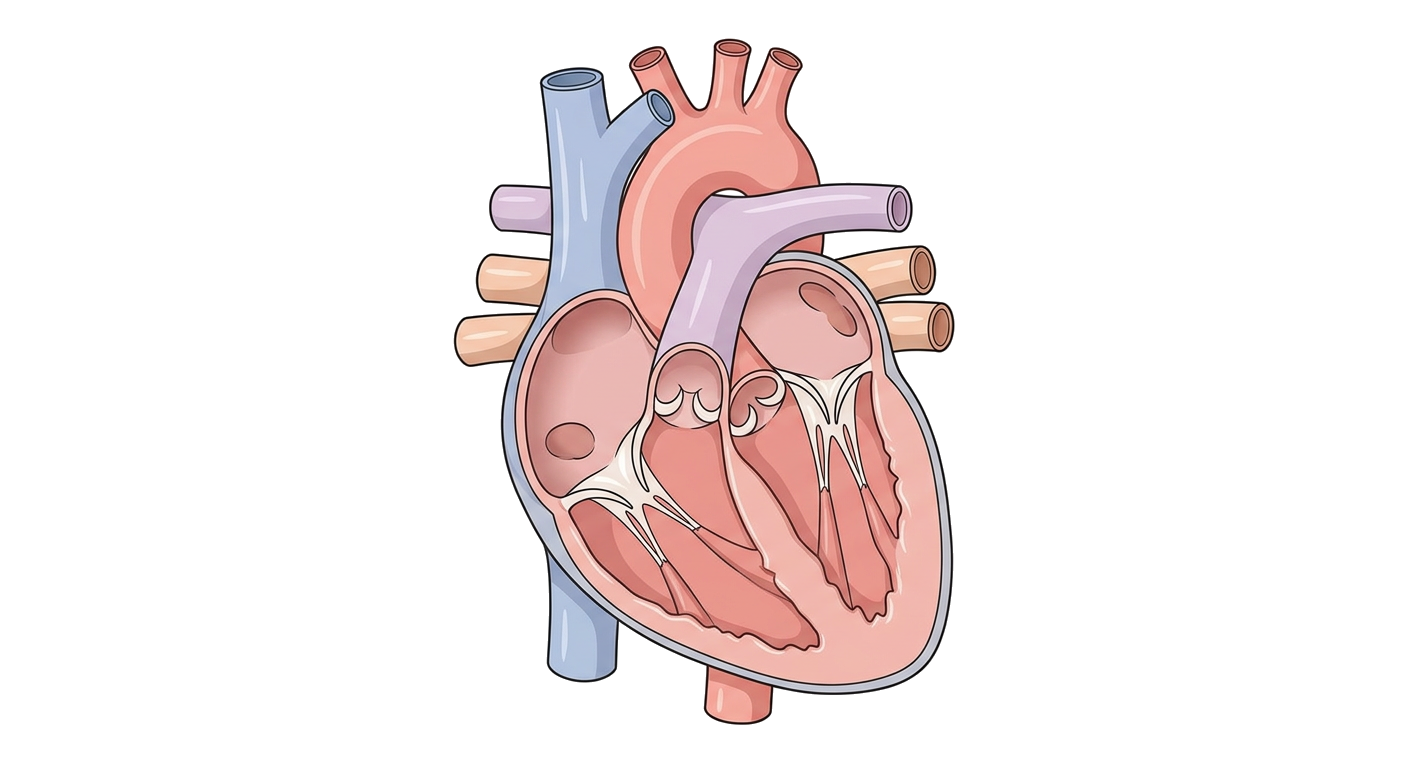
5. Using the diagram above, label the following internal structures: Right Atrium, Left Ventricle, Aortic Valve, Pulmonary Valve, Chordae Tendineae.
1. Which of the following correctly describes the path of blood flow through the heart?
Right Atrium → Left Atrium → Right Ventricle → Left Ventricle
Vena Cava → Right Atrium → Right Ventricle → Pulmonary Artery
Pulmonary Vein → Right Atrium → Left Atrium → Aorta
Left Ventricle → Pulmonary Artery → Lungs → Pulmonary Vein
2. What is the primary function of the heart valves?
To pump blood to the lungs
To prevent the backflow of blood
To generate electrical impulses
To regulate blood pressure
1. The left ventricle has a thinner muscular wall than the right ventricle because it pumps blood only to the lungs.
True
False
2. Chordae tendineae are fibrous cords that connect the atrioventricular valves to the papillary muscles, preventing valve inversion.
True
False
1. Compare the thickness of the atrial walls to the ventricular walls. Explain why there is a difference.
2. Describe any anatomical variations or unique features you observed in your specific heart specimen. How might these variations impact function?
Related Worksheets
Grade 12 Biology: Dissection Fundamentals
This worksheet covers essential concepts and practices in biological dissection, including safety, tool identification, and ethical considerations for Grade 12 Biology students.
Grade 12 Biology: The Integumentary System
This worksheet covers the structure, function, and common conditions of the human integumentary system for Grade 12 Biology students.
Grade 12 Biology: Heart Rate
This worksheet explores the physiological mechanisms regulating heart rate, factors influencing it, and methods of measurement for Grade 12 Biology students.
Grade 12 Non-Mendelian Inheritance Worksheet
Explore advanced concepts in genetics beyond simple Mendelian patterns, including incomplete dominance, codominance, multiple alleles, and polygenic inheritance.